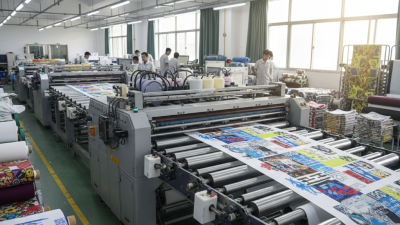
China has become an important manufacturing base for textile recycling machine technology. Its suppliers serve spinning mills, garment factories, and professional recycling plants worldwide. However, “top” should not mean the largest catalogue or lowest price. It should mean proven performance, transparent specifications, and dependable technical support.
Professor Subramanian Senthilkannan Muthu, a widely published textile sustainability researcher, has stated, “Textile recycling is not a single technology; it requires an integrated approach.” This principle matters when comparing Chinese manufacturers. A reliable textile recycling machine should match the material, including cotton waste, polyester fabric, blended textiles, and post-industrial scraps. Cutting, shredding, opening, fiber separation, and dust control must work as one practical system.
Details reveal quality.
Serious manufacturers provide production trials, energy data, maintenance schedules, and replacement-part information. Buyers should inspect fiber length, output consistency, noise levels, and dust collection during testing. Factory visits can also reveal assembly standards that brochures often hide. Certifications help, but they do not replace operating evidence.
Some suppliers may present impressive capacity figures. Real production can be lower when feedstock contains moisture, elastane, or heavy contamination. This is where careful evaluation becomes necessary. A machine that performs well with clean cotton may struggle with mixed garments. That weakness should not be ignored.
This guide examines leading Chinese manufacturers through technology, customization, application experience, and after-sales reliability. It also recognizes an uncomfortable fact: no textile recycling machine solves every waste problem. The best choice depends on honest material analysis, realistic targets, and continuous technical cooperation.
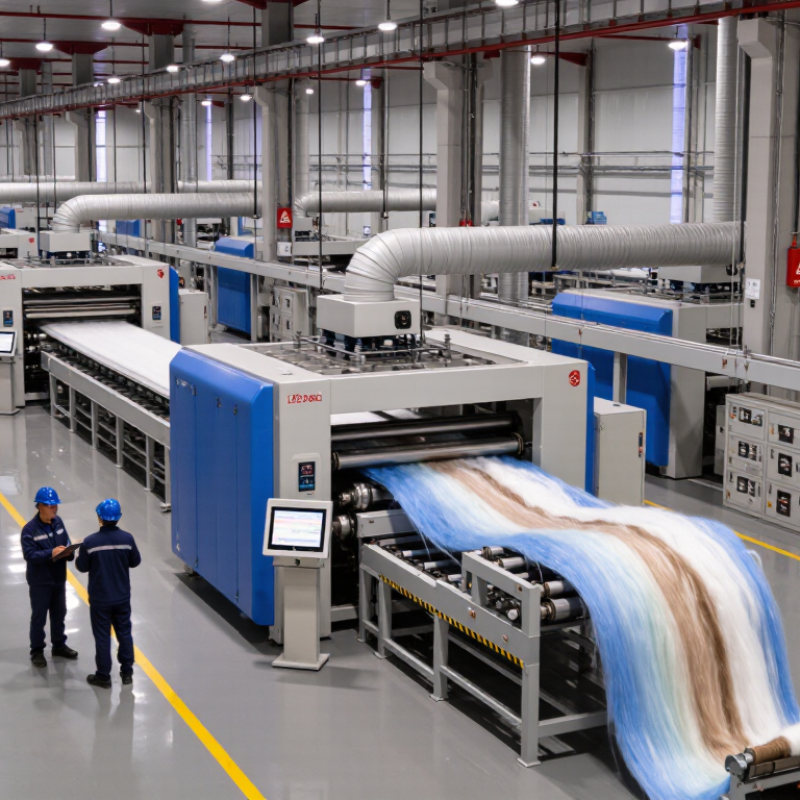
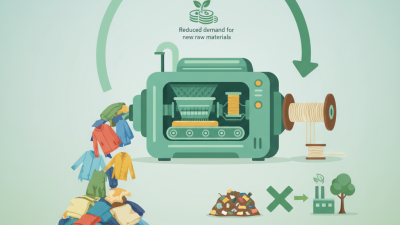
China’s textile recycling machine manufacturing industry is becoming a crucial link in the circular textile supply chain. Textile Exchange reported that global fiber production reached 124 million tonnes in 2023. It may exceed 160 million tonnes by 2030. This pressure is encouraging Chinese manufacturers to develop shredders, fiber openers, garnetting lines, sorting systems, and melt filtration equipment.
A modern line must handle cotton waste, polyester fabric, blended garments, and production scraps without excessive fiber damage. Operators often inspect dust levels, moisture content, blade wear, and output length during each shift. According to the China National Bureau of Statistics, China remains the world’s largest textile manufacturing base, creating a substantial and consistent feedstock for recycling equipment. The 2024 Textile Exchange Materials Market Report also identifies recycled polyester as a major part of the recycled fiber market, although mechanical recycling still faces quality limitations.
Manufacturers are improving automated feeding, impurity removal, energy monitoring, and digital production controls. These upgrades can reduce manual handling and improve batch consistency. However, equipment performance depends heavily on waste sorting and factory management. A sophisticated machine cannot fully correct mixed fibers, metal residues, or damp input materials. That is an uncomfortable industry truth. Some recycling lines still promise more than they consistently deliver in daily production. Independent testing, traceable performance data, spare-parts access, and operator training should therefore influence purchasing decisions as much as headline capacity.
China Top Textile Recycling Machine Manufacturers
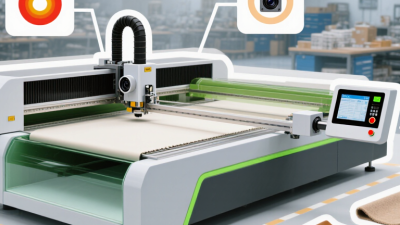
Chinese textile recycling manufacturers produce several machine types for different waste streams. Cutting machines reduce long fabric rolls, selvage, and production offcuts into manageable pieces. Shredders then open compacted textiles without excessive fiber damage. This stage matters for cotton, wool, denim, and blended materials.
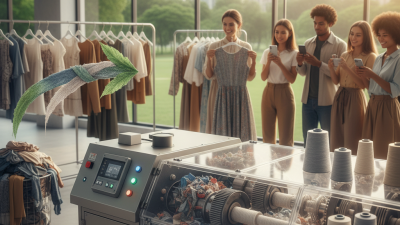
Garnett machines separate fabric into loose fibers through controlled cylinders and toothed rollers. Operators adjust feed speed and roller settings for the desired fiber length. Opening machines remove knots and improve fiber distribution before spinning or nonwoven production. Air filtration units capture dust near the working area. They support cleaner production and safer daily operation.
Some recycling lines include optical or manual sorting equipment. These systems separate colors, materials, and visible contaminants before processing. Nonwoven recycling machines turn reclaimed fibers into felt, insulation, or padding. The best equipment depends on fiber composition, moisture, contamination, and final use. Pure cotton usually behaves predictably. Blended fabric is less cooperative. It may produce uneven fiber quality and more waste.
Practical buyers should inspect throughput tests, energy use, replacement parts, and maintenance access. A machine rated for ten tons daily may perform differently with wet or elastic fabrics. Factory trials reveal problems that brochures often miss. Noise, dust leakage, and fiber loss deserve careful checking. Recycling is not perfectly consistent. Good engineering reduces that uncertainty, but it cannot remove every material limitation.
The chart compares indicative commercial throughput ranges for common textile recycling machine types manufactured in China. Actual capacity depends on feedstock, fiber composition, moisture, screen size, process configuration, and finished-product requirements.
Throughput is shown in kilograms per hour. These ranges represent typical equipment specifications used for textile shredding, fiber opening, garnetting, carding, and needle-punching applications; they are not brand-specific performance guarantees.
Modern textile waste processing depends on several connected technologies. Sorting is decisive. Optical sensors identify color, fiber type, and contamination on a moving conveyor. Skilled operators still check difficult blends because sensors can misread dark or coated fabrics. Accurate sorting improves fiber quality and reduces unnecessary reprocessing.
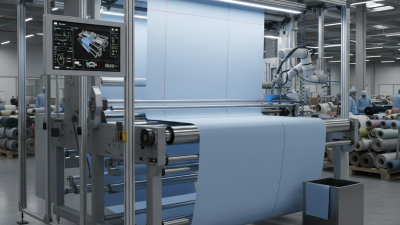
A cutting machine then reduces garments, selvage, and fabric rolls into controlled pieces. Adjustable blades help prevent excessive dust and uneven feeding. The material moves through tearing chambers, where rotating cylinders separate fibers without excessive damage. Moisture matters. A controlled conditioning system can reduce static electricity and improve feeding stability, especially with dry synthetic fabrics.
Air separation removes heavier particles, buttons, zippers, and loose dirt. Advanced filtration captures fine dust before it reaches the workshop environment. Carding units then align and open the recovered fibers for nonwoven products, insulation, or regenerated yarn. Quality sensors can monitor weight, moisture, and fiber length during production.
The process is not flawless. Repeated tearing shortens fibers, and mixed textiles remain difficult to recycle consistently. Experienced manufacturers therefore combine machine data with manual inspection and regular blade maintenance. A reliable line should provide traceable settings, accessible safety controls, and clear cleaning procedures. Small design details matter, such as sealed bearings and quick-release screens. These features reduce downtime, although they cannot replace careful operating habits.
China Top Textile Recycling Machine Manufacturers
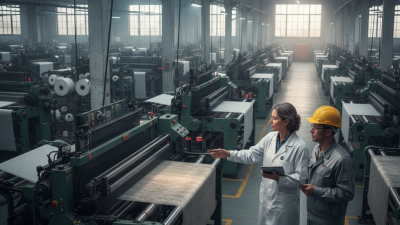
Leading Chinese manufacturers of textile recycling equipment often compete through practical engineering rather than attractive specifications alone. Their product strengths include customized tearing machines, fiber openers, dust-control units, carding lines, and compact production layouts. Many factories support complete lines, from fabric feeding to recycled fiber output. This reduces installation gaps between separate suppliers. Experienced buyers should examine throughput using their actual materials, not only standard samples. Cotton scraps, denim, blended fabric, and knitted waste behave differently. A machine may perform well in testing but struggle with elastic fibers or heavily contaminated feedstock. That uncomfortable detail matters.
Tips: Request a live trial with your own waste. Check fiber length, dust levels, noise, energy use, and maintenance access. Ask for clear spare-parts lists and operator training. Photos are useful, but measured results are stronger.
Reliable Chinese manufacturers usually provide technical drawings, electrical details, wear-part guidance, and commissioning support. Some offer modular designs, allowing customers to add opening or carding stages later. This can help smaller recyclers control investment risk. However, customization may increase delivery time and complicate troubleshooting. Buyers should confirm motor standards, control-system language, safety guarding, and after-sales response before signing. Factory visits can reveal welding quality, assembly discipline, testing procedures, and actual production experience. A polished showroom is not enough. Request recent operating references where possible, while recognizing that every material mix requires fresh validation.
| Machine Category | Typical Textile Input | Core Processing Function | Indicative Throughput Range | Common Product Output | Key Product Strengths Commonly Offered by Chinese Manufacturers | Important Purchasing Considerations |
|---|---|---|---|---|---|---|
| Textile Pre-Opening and Tearing Line | Cotton cutting waste, denim scraps, knitted fabric waste, blended garment waste | Removes hard contaminants, cuts and opens fabric, and separates compacted textile waste into reusable fibers | Approximately 100–1,000 kg/h, depending on material, line configuration, and desired fiber quality | Opened fiber, reclaimed fiber, or fiber prepared for spinning and nonwoven production | Modular line design Adjustable tearing intensity Integration with conveyors and dust filtration Suitable for customized layouts | Excessive mechanical force can shorten fiber length; the line should be matched to fabric construction and target end use |
| Garnetting and Fiber Reclaiming Machine | Spinning waste, weaving selvage, knitted waste, wool and cotton textile offcuts | Feeds textile waste through pinned cylinders to separate yarns and fabric into fibrous material | Commonly about 50–500 kg/h per machine, with actual output varying by fiber type and feed uniformity | Reclaimed fiber for yarn blending, filling, insulation, carpet backing, or nonwoven products | Compact equipment footprint Replaceable garnet clothing Variable-speed operation Adaptable to different fiber grades | Operators must control feed rate and cylinder settings to balance opening efficiency with fiber preservation |
| Shoddy Fiber Production Line | Cotton garments, denim, towels, knitted fabrics, wool textiles, and mixed post-industrial textile waste | Performs sorting, cutting, tearing, opening, blending, and dust removal in a continuous process | Roughly 300–2,000 kg/h for complete lines, subject to the number of opening stages and material composition | Shoddy fiber used in automotive felt, mattress padding, insulation, wiping products, and low-to-medium-grade yarn blends | Complete turnkey integration High customization potential Multi-stage opening Dust-control system options | Dark, heavily contaminated, or highly blended textiles may require sorting and cleaning before processing |
| Textile Sorting and Pre-Processing Equipment | Used clothing, post-consumer textiles, production scraps, and mixed-color fabric waste | Separates textiles by color, fiber type, condition, size, and contamination level before mechanical recycling | Manual and semi-automatic systems range from small workshop volumes to several tonnes per day | Sorted textile feedstock for reuse, resale, mechanical recycling, or specialized treatment | Flexible sorting configurations Conveyor-based handling Manual-to-automated upgrade paths Improved feed consistency | Sorting accuracy depends on labor, sensor configuration, lighting, material presentation, and fiber identification method |
| Recycled Fiber Carding and Web-Forming Line | Mechanically opened cotton, polyester, wool, viscose, and blended reclaimed fibers | Aligns and distributes fibers into a web for nonwoven production or subsequent needlepunching | Often approximately 100–1,500 kg/h, depending on working width, fiber blend, and web weight | Fiber web, recycled felt, insulation material, carpet underlay, and automotive nonwoven products | Wide working-width options Adjustable web weight Line compatibility Suitable for recycled-fiber applications | Recycled fibers may require blending with virgin or stronger fibers to achieve the required web strength and uniformity |
| Needlepunch Nonwoven Recycling Line | Reclaimed fibers from garments, carpets, upholstery, industrial textiles, and production waste | Converts a formed fiber web into mechanically bonded nonwoven material through repeated needle penetration | Approximately 100–2,000 kg/h, depending on line width, needle density, material thickness, and production speed | Automotive insulation, geotextiles, acoustic panels, carpet backing, mattress components, and protective felt | Heavy-duty construction Customizable line width Multiple bonding configurations Suitable for high recycled content | Final performance depends on fiber blend, web uniformity, needle configuration, basis weight, and bonding parameters |
| Waste Polyester Fiber Recycling Line | Polyester fabric scraps, filament waste, staple-fiber waste, and selected PET-based textile materials | Cuts, compacts, melts, or otherwise reprocesses polyester waste according to the selected mechanical recycling route | Common capacities range from several hundred kilograms per hour to multiple tonnes per hour for larger systems | Recycled polyester flakes, pellets, or regenerated fiber, depending on the process configuration | High automation potential Temperature and speed control Integration with pelletizing or spinning equipment Suitable for industrial-scale projects | Material cleanliness, polymer type, moisture, color, additives, and degradation level strongly affect output quality |
| Dust Collection and Air-Filtration System | Airborne lint, fiber dust, short fibers, and particulates generated during opening and tearing | Captures process dust and maintains controlled airflow around textile recycling equipment | Sized according to line airflow demand; industrial systems commonly use multiple filtration stages | Cleaner production environment, recovered dust fraction, and improved protection for machinery and operators | Integrated line matching Cyclone and filter options Negative-pressure design Improved workplace cleanliness | Textile dust can present fire and explosion risks; ventilation, grounding, housekeeping, and safety engineering are essential |
| Control, Automation, and Line-Integration Package | Complete textile recycling lines requiring coordinated feeding, opening, sorting, filtration, and baling | Controls machine sequencing, motor speed, material flow, alarms, interlocks, and production monitoring | Designed around the capacity of the complete recycling line rather than a single machine | More stable production, reduced manual intervention, traceable operating parameters, and easier process adjustment | PLC-based control options Touchscreen monitoring Remote-support capability Customized electrical standards | Buyers should confirm voltage, frequency, safety requirements, language support, spare parts, commissioning, and operator training |
China Top Textile Recycling Machine Manufacturers
How to Evaluate Chinese Textile Recycling Machine Suppliers
Choosing a Chinese textile recycling machine supplier requires more than comparing prices. Check the supplier’s production history, technical team, and export experience. Request videos of operating equipment, not only polished showroom images. A reliable supplier should explain each stage, from fabric feeding to fiber opening and dust collection. Ask for measurable data, including hourly capacity, power consumption, noise levels, and acceptable material moisture. These details reveal whether the machine fits your actual factory conditions.
Tips: Visit the factory if possible. Inspect welding, electrical cabinets, safety guards, and spare-part storage. Send a small batch of your own cotton, polyester, or blended waste for testing. Measure fiber length, cleanliness, dust output, and production speed. A test using different materials provides stronger evidence than a single demonstration. Also request installation drawings, operating manuals, maintenance schedules, and a clear warranty. Confirm response times for technical support and the availability of replacement components.
Do not judge quality from appearance alone. A bright painted frame can hide weak bearings or poor calibration. Ask for references from factories with similar waste streams and production targets. Review inspection records and request a written performance agreement. I would also compare energy use over a full shift, not one short trial. Results may change after several hours. That matters. Some suppliers may promise perfect fiber recovery, but real textile waste contains zippers, dust, coatings, and mixed fibers. A dependable partner acknowledges these limits and helps design a practical process.