10 Best Textile Machinery Suppliers for Global Buyers
Choosing among the 10 best textile machinery suppliers requires more than comparing machine prices. Buyers must examine productivity, energy consumption, automation, spare-parts access, training, and local service capacity. A fast machine can still become expensive when maintenance support is slow. Small details matter.
The International Textile Machinery Federation’s International Textile Machinery Shipment Statistics 2023 reported approximately 8.61 million new short-staple spindles shipped globally, despite a year-on-year decline. Its data shows continued investment, but also a cautious market. Grand View Research estimated the global textile machinery market at about USD 28.26 billion in 2023, with further growth expected through 2030. These figures suggest opportunity, not certainty. Regional demand, financing costs, labor availability, and sustainability rules can change a purchasing decision quickly.
Prof. Dr. Thomas Gries, former director of the Institute for Textile Technology at RWTH Aachen University, has described textile machinery as “the backbone of modern textile production.” That view remains practical. Machinery determines fabric consistency, waste levels, worker safety, and production flexibility. This guide compares leading suppliers through those operational realities. It considers spinning, weaving, knitting, dyeing, finishing, and smart-factory solutions. Company reputation alone is not enough. Buyers should request verified output data, lifecycle costs, reference installations, and service response times. Some supplier claims remain difficult to compare fairly. That is an important limitation. A machine that performs well in Europe may need different settings in Southeast Asia, Africa, or Latin America. The strongest supplier is therefore not always the largest one. It is the partner that delivers reliable performance after installation.
What Textile Machinery Suppliers Do for Global Textile Manufacturers
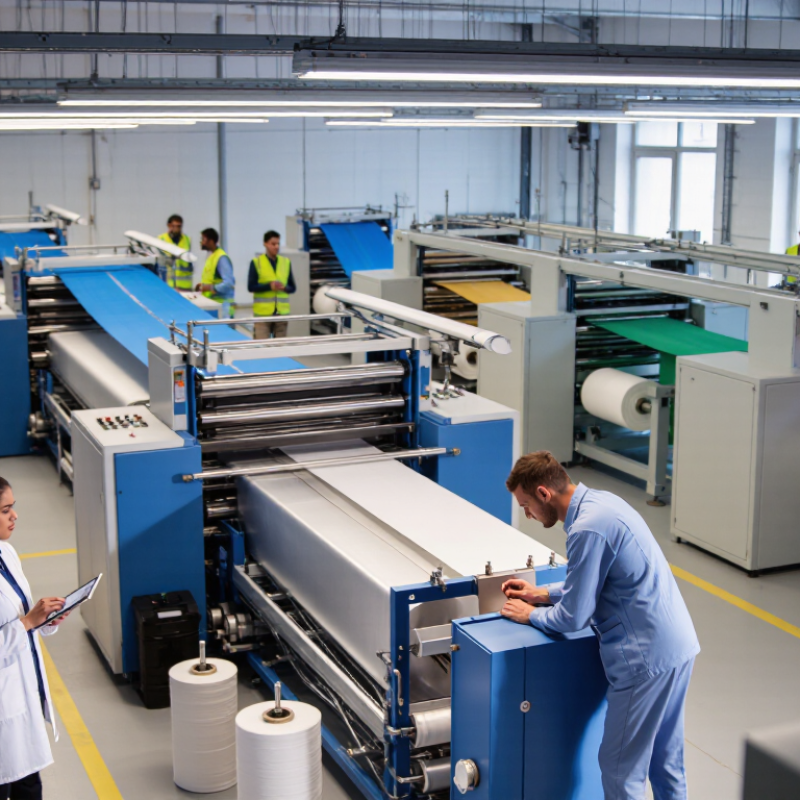
Textile machinery suppliers do more than sell spinning, weaving, knitting, dyeing, or finishing equipment. They study a manufacturer’s fiber types, production volume, floor space, and energy limits. A useful supplier asks about fabric weight, machine speed, humidity, and operator skills. Small details matter. A narrow doorway can delay installation for days.
Experienced suppliers help buyers compare machine capacity with real production targets. Rated output is not always usable output. Maintenance stops, material changes, and operator learning reduce daily performance. Good suppliers explain these gaps clearly. They may recommend modular equipment instead of the fastest available line. That choice can protect cash flow and simplify future expansion.
Their work often continues after delivery. Technical teams inspect foundations, align moving parts, test safety systems, and train operators beside the machine. They also provide maintenance schedules, spare-parts planning, and troubleshooting records.
Remote support can identify abnormal vibration before it damages a bearing. On-site support remains important when dust, heat, or unstable power affects production. I have found that documentation is often treated as a minor task. It should not be. A missing wiring diagram can waste hours during a night shift.
Suppliers also help manufacturers review local safety rules and environmental requirements. However, buyers should challenge every promise and request measurable evidence. A polished demonstration may hide difficult cleaning, high water use, or expensive consumables. The best partnership allows practical questions, honest limitations, and revisions after real factory testing.
Key Criteria for Evaluating International Textile Machinery Suppliers
10 Best Textile Machinery Suppliers for Global Buyers
Key Criteria for Evaluating International Textile Machinery Suppliers
Choosing among the ten best suppliers requires more than comparing machine prices. Experienced buyers examine production records, machine lifespan, and measurable output. Ask for recent customer references from factories with similar materials and capacity. A supplier’s technical team should explain speed, energy use, maintenance intervals, and expected fabric quality in clear terms.
Request a detailed quotation. It should list machine specifications, installation work, training, spare parts, and delivery conditions. Check whether the supplier provides factory acceptance testing before shipment. A video demonstration helps, but an independent inspection is stronger evidence. Small details matter, such as control-panel language, electrical compatibility, and the availability of replacement components near your market.
Reliability also depends on communication after installation. Test response times with practical questions, not general inquiries. Review warranty terms, service coverage, and documented conformity with local safety requirements. A polished brochure can still hide weak after-sales support. That is an uncomfortable risk. Buyers should also calculate total operating cost, including electricity, waste, labor, and downtime. The cheapest machine may become expensive during a humid season or an urgent production change. Supplier rankings should remain flexible, because real factory conditions often challenge early assumptions.
The 10 Best Textile Machinery Suppliers for Global Buyers
The 10 Best Textile Machinery Suppliers for Global Buyers should be judged by measurable performance, not attractive catalogs. Strong suppliers usually cover spinning, weaving, knitting, dyeing, finishing, and automated material handling. They provide factory trials, operator training, spare-part planning, and documented energy data. These details matter when a machine runs continuously in a humid production hall.
ITMF’s 2023 International Textile Machinery Shipment Statistics recorded about 8.38 million new short-staple spindles shipped worldwide, a 2% decline from the previous year. The same report noted a sharper fall in open-end rotor shipments. This uneven demand shows why the best ten suppliers must offer flexible configurations, not one fixed production model. Buyers should compare output stability, maintenance intervals, software compatibility, and local technical support. A low purchase price can become expensive after repeated stoppages.
Textile Exchange reported global fiber production at approximately 132 million tonnes in 2023, with further growth expected by 2030. That pressure increases demand for machinery supporting recycled inputs, lower water use, and traceable production records. The strongest suppliers can demonstrate these results through factory data, not vague sustainability claims. Ask for sample fabric, noise readings, energy consumption, and service response times. Visit an operating installation if possible. No ranking is flawless. A supplier with excellent engineering may still lack reliable regional support. Buyers should also reconsider promised payback periods when labor costs, waste rates, and import procedures change.
Comparing Equipment Types, Technologies, and Manufacturing Capabilities
10 Best Textile Machinery Suppliers for Global Buyers
Choosing among ten leading textile machinery suppliers requires more than comparing catalogue prices. Buyers should match equipment types with fabric goals, energy limits, and local service capacity. Spinning lines suit staple-fibre yarns, while air-jet and rapier looms address different speed, width, and fabric requirements. Circular knitting machines support flexible apparel production. Dyeing, finishing, nonwoven, recycling, inspection, and digital printing systems require separate technical evaluations.
Technology changes the operating equation. Servo drives can improve motion control, while sensors expose vibration, temperature, and production losses. Heat-recovery units may reduce fuel demand in finishing plants. The International Textile Machinery Federation reported a 19% year-on-year decline in new short-staple spindle shipments in 2023. Shuttle-less loom shipments fell by about 4% during the same period. These figures suggest cautious investment, not weak technical demand. A supplier with modular upgrades may be safer than one offering only large turnkey lines.
Manufacturing capability deserves physical verification. Ask for factory acceptance tests, sample fabrics, spare-part lead times, and documented commissioning records. Inspect machining quality, electrical cabinets, software backups, and operator training areas. Suppliers should explain output under realistic humidity, fibre blends, and shift patterns. The Textile Exchange Materials Market Report 2024 estimated global fibre production at 124 million tonnes in 2023, increasing pressure for efficient and recycled-material processing. I would not trust a claimed efficiency figure without production data. One weakness remains common: buyers compare purchase prices, but overlook maintenance skills and retrofit compatibility. That mistake can leave an impressive machine idle.
10 Best Textile Machinery Suppliers for Global Buyers
Comparing Equipment Types, Technologies, and Manufacturing Capabilities
This chart compares representative industrial weaving technologies using commonly published mid-range specifications.
Weaving speed is measured in picks per minute, while maximum working width is measured in centimeters.
Actual performance depends on fabric construction, yarn type, machine configuration, and operating conditions.
Data basis: representative ranges reported in public technical specifications for industrial weaving equipment; values are intended for buyer-level benchmarking and are not supplier rankings.