
2026 Top Seawater Desalination Membrane Types?

As water stress intensifies, the 2026 desalination market is moving beyond one-size-fits-all solutions. This article examines the leading Seawater Desalination Membrane types shaping new plant designs. Reverse osmosis remains the commercial benchmark. Its thin-film composite layers can produce fresh water under high pressure. However, performance depends on more than salt rejection. Operators must also manage fouling, boron passage, pressure loss, cleaning frequency, and membrane replacement.

Professor Menachem Elimelech, a widely recognized desalination researcher, offers a useful warning: “Desalination is not a silver bullet.” That sentence deserves attention. A membrane may reject dissolved salts effectively, yet still perform poorly when algae, suspended solids, or oil reach the feed channel. A real intake line is rarely as clean as a laboratory sample. Small design choices matter. Pretreatment quality, energy recovery, brine handling, and local electricity sources can change the environmental result.

The 2026 discussion will therefore compare several membrane pathways. These include advanced reverse osmosis, nanocomposite membranes, forward osmosis, membrane distillation, and hybrid systems. Each type presents a different balance of energy demand, durability, selectivity, and scale-up readiness. Reverse osmosis leads today, while emerging membranes attract attention through lower pressure potential or improved fouling resistance. Still, laboratory results can look better than full-scale operation. That gap remains difficult. This overview uses engineering evidence, operating experience, and current industry direction to identify which Seawater Desalination Membrane technologies appear practical, promising, or not yet ready for broad deployment.
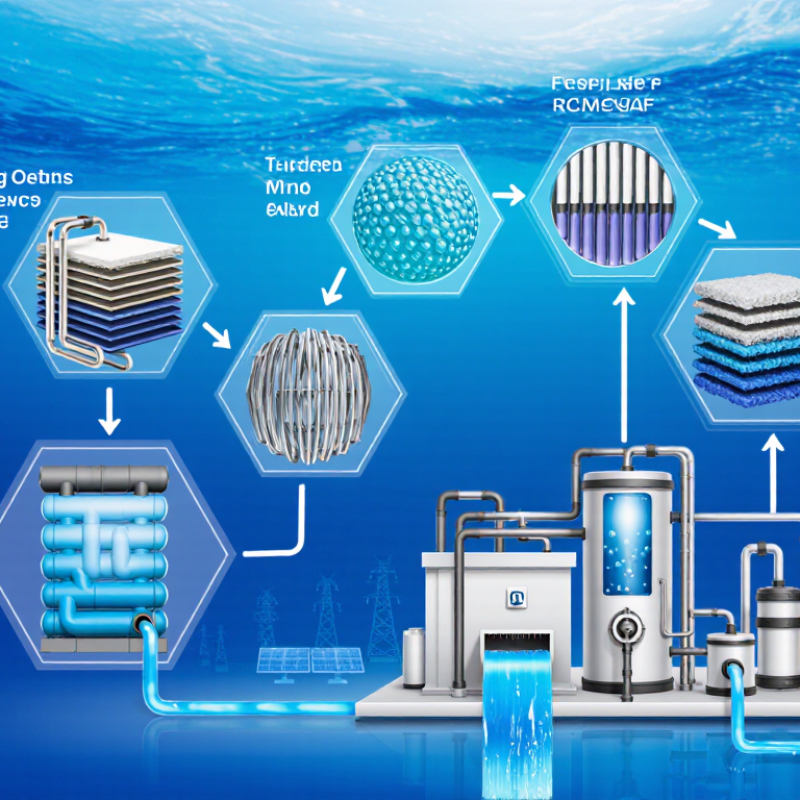
2026 Top Seawater Desalination Membrane Types?

What Seawater Desalination Membranes Are and How They Work

Seawater desalination membranes act as selective barriers. They allow water molecules to pass while slowing dissolved salts, minerals, and many contaminants. A typical seawater feed contains about 35,000 milligrams of salt per liter. That is a demanding environment.

Reverse osmosis remains the leading membrane type for large desalination plants in 2026. High-pressure pumps push seawater against a dense membrane surface, often at 55–70 bar. Water crosses through microscopic free volume inside the membrane. Most salts stay behind in the concentrated brine stream. The purified flow is called permeate. Membrane fouling still causes trouble. Algae, oil, and fine particles can block the surface, so careful pretreatment matters.

Ultrafiltration and microfiltration usually protect the main process rather than remove dissolved salt. Their larger pores can capture suspended solids, bacteria, and colloidal particles before reverse osmosis. Nanofiltration uses a tighter structure and can reduce hardness, sulfate, and some organic compounds at lower pressure. It may support seawater treatment, but it rarely replaces reverse osmosis for full salt removal. Forward osmosis is also being studied. It draws water through a membrane using a concentrated solution, but recovering that solution adds complexity. Membrane selection is not purely technical. Feed quality, cleaning frequency, energy use, and local discharge limits can change the better choice. No membrane performs perfectly. Even small design assumptions deserve testing.

Reverse Osmosis Membranes: Structure, Materials, and Applications

Reverse Osmosis Membranes: Structure, Materials, and Applications

In 2026, reverse osmosis remains a leading method for seawater desalination. Its performance depends on structure, material selection, and pretreatment. Most seawater elements use thin-film composite membranes in spiral-wound modules. A porous support carries an ultra-thin selective layer. This layer blocks dissolved salts while allowing water molecules to pass under pressure.

Aromatic polyamide is widely used because it offers strong salt rejection and practical water flux. Cellulose acetate can tolerate certain oxidants better, but it usually needs different operating conditions. Fouling still creates trouble. Algae, oil, hardness, and fine particles may cover the membrane surface. Operators therefore use screening, filtration, chemical adjustment, and regular monitoring.

Applications include municipal drinking water, industrial process water, and high-purity water production. In coastal plants, energy demand remains a serious design factor.

Tips: Check feedwater data before selecting a membrane. Measure pressure, temperature, conductivity, and salt passage during operation. Keep pretreatment stable. Small mistakes here become expensive later. No membrane choice is perfect. I would question any specification based only on rated rejection. Real performance changes with cleaning frequency, recovery rate, and seasonal seawater conditions. Field records and independent testing often reveal more than a catalogue value.

Emerging Membrane Types for Improved Desalination Performance

By 2026, seawater reverse osmosis will remain the main desalination platform. Industry data from the International Desalination Association and Global Water Intelligence place global desalination capacity at roughly 130 million cubic metres per day. Seawater systems provide a large share of this output. Modern plants commonly target about 2.5–4 kilowatt-hours per cubic metre, depending on intake, salinity, and recovery rate.

Emerging membrane types aim to reduce pressure and fouling. Thin-film nanocomposite membranes add engineered nanoparticles or graphene-based layers to improve water transport and salt rejection. Aquaporin-inspired membranes imitate biological channels, although long-term stability remains difficult in real seawater. Membrane distillation can use low-grade heat and handle concentrated brine, but its heat demand still limits large-scale deployment. The International Energy Agency identifies energy intensity as a central challenge for desalination growth.

Promising on paper.

Osmotically assisted reverse osmosis may lower hydraulic pressure, especially for high-salinity feeds. Ceramic membranes offer stronger chemical and thermal resistance, yet their capital cost can be substantial. Field experience also exposes a less attractive truth: laboratory flux results often decline after months of biofouling, scaling, and cleaning. Reports from the World Health Organization stress that membrane performance must be linked with reliable pretreatment and water-quality monitoring. Future systems will likely combine several membrane layers, smarter sensors, and renewable electricity. The technology is improving, but durability deserves more attention.

Key Factors for Comparing Desalination Membrane Technologies

2026 Top Seawater Desalination Membrane Types?

Comparing desalination membranes requires more than checking salt rejection. Reverse osmosis remains the main seawater option because it separates ions under pressure. The World Bank reports typical seawater reverse osmosis energy use near 3–4 kWh per cubic metre. Pretreatment quality strongly affects that figure. A sandy intake, warm water, and frequent algal blooms can change operating results quickly. Small details matter.

Nanofiltration removes larger dissolved ions and organic compounds, but it usually cannot match reverse osmosis for seawater salinity. It may support hybrid systems or reduce pretreatment loads. Electrodialysis and electrodialysis reversal suit brackish water better, where salinity is lower. Thermal membranes tolerate some difficult feeds, yet their heat demand can be substantial. The comparison is not perfectly fair.

The United Nations University reported global desalination capacity of about 95 million cubic metres daily in 2018, with brine volumes exceeding product water. That figure highlights a practical issue: membrane selection also affects concentrate management. Buyers should compare salt passage, flux decline, cleaning frequency, pressure, recovery rate, and membrane replacement intervals. Independent pilot testing remains valuable. Laboratory numbers can look too clean. A 2026 specification should include seasonal testing, energy monitoring, and transparent water-quality records. Industry reports provide useful benchmarks, but local evidence should carry more weight.

2026 Top Seawater Desalination Membrane Types? – Key Factors for Comparing Desalination Membrane Technologies

Comparative overview of major membrane technologies used or evaluated for seawater desalination

Membrane technology Primary separation mechanism Typical operating conditions Typical salt rejection Indicative energy demand Main advantages Key limitations Commercial status for seawater
Seawater reverse osmosis (SWRO) Pressure-driven solution-diffusion through a dense polymer membrane; water permeates while most dissolved salts are retained. Feed pressure commonly about 55–80 bar; normally operated near ambient feed temperature, often approximately 15–35°C. Approximately 99.5–99.85% for total dissolved salts with well-designed elements and suitable pretreatment. Approximately 2.5–4.5 kWh/m³ of electricity for modern large-scale systems; actual values depend on recovery, salinity, pretreatment and energy recovery. Highest technology maturity; compact footprint; high salt removal; modular design; compatible with energy-recovery devices. Sensitive to fouling, scaling, biofouling and oxidation; requires effective pretreatment; produces a concentrated brine stream. Mature and dominant
Nanofiltration (NF) Pressure-driven size exclusion and charge-based separation through a looser membrane than RO. Typically about 5–25 bar; operation is generally near ambient temperature. Often greater than 90% for multivalent ions, while sodium chloride rejection is commonly much lower, roughly 20–70% depending on membrane and feed. Approximately 0.5–2.5 kWh/m³ when used as a pressure-driven pretreatment or partial softening step. Removes hardness, sulfate and larger organic molecules at lower pressure than RO; can reduce scaling potential in downstream RO. Usually cannot produce low-salinity drinking water from seawater alone; dissolved monovalent salts may pass through; concentrate still requires management. Supporting or niche role
Membrane distillation (MD) Thermally driven transport of water vapor through hydrophobic microporous membranes; nonvolatile salts are retained. Feed temperatures commonly about 50–90°C; hydraulic pressure is low, but a temperature difference is required. Typically above 99.9% for dissolved salts when membrane wetting is prevented. Thermal demand is commonly about 100–300 kWhth/m³, with additional electrical demand often around 0.1–2 kWh/m³; values vary widely by configuration and heat recovery. Can use low-grade waste heat or solar heat; high rejection; less affected by osmotic pressure; suitable for high-salinity concentrates. Lower commercial maturity; membrane wetting, heat loss, temperature polarization and scaling can reduce performance. Emerging and site-specific
Forward osmosis (FO) Osmotically driven water transport from seawater through a semi-permeable membrane into a concentrated draw solution. Low hydraulic pressure; performance depends on draw-solution osmotic pressure, concentration and regeneration method. Often greater than 95–99% for salts, depending on membrane selectivity, internal concentration polarization and reverse solute flux. FO membrane transport itself has low electrical demand, but total system energy can be significant because the draw solution must be regenerated. Lower hydraulic pressure; potentially reduced fouling tendency; can be integrated with waste heat, fertilizer production or other draw-solution processes. Draw-solution leakage and regeneration remain major challenges; concentration polarization lowers flux; complete product-water recovery is complex. Pilot and specialized applications
Electrodialysis / electrodialysis reversal (ED/EDR) Electric potential drives ions through alternating cation- and anion-exchange membranes. Low hydraulic pressure; electrical current and feed conductivity control operating performance. Can achieve high ion removal in suitable feed ranges, but is generally less attractive for full-strength seawater desalination. Approximately 1–4 kWh/m³ for lower-salinity brackish-water applications; full-strength seawater can require substantially more energy. Good control of ionic removal; EDR polarity reversal helps reduce scaling and fouling; useful for brackish water and selective ion removal. Energy demand rises with salinity; does not remove uncharged organics or microorganisms effectively; not normally the first choice for seawater. Limited for seawater; established for brackish water
Pervaporation A dense or composite membrane separates water by selective sorption and vaporization under a vacuum or sweep-gas condition. Often operated with feed temperatures roughly 60–120°C and a low-pressure permeate side, depending on membrane chemistry. Potentially above 99.9% for salts, although long-term seawater performance depends strongly on membrane stability and process design. Typically higher than mature SWRO on a practical total-energy basis; published values vary substantially with heat recovery and vapor-generation method. Very high theoretical selectivity; can use thermal energy; may be useful for difficult concentrates and hybrid desalination systems. Low flux, membrane aging, concentration polarization and high thermal requirements limit large-scale seawater deployment. Research and early-stage development

How to compare technologies

For seawater projects, compare the complete system rather than membrane rejection alone. Important criteria include feed salinity and temperature, recovery rate, pretreatment requirements, specific energy consumption, energy source, fouling and scaling control, chemical use, concentrate management, product-water quality, membrane lifetime, footprint and technology maturity. Energy figures are indicative ranges and are not directly equivalent across pressure-driven, electrically driven and thermally driven processes.

Units: kWh/m³ = electrical energy per cubic metre of product water; kWhth/m³ = thermal energy per cubic metre. Actual performance depends on feedwater composition, temperature, recovery, pretreatment, membrane design and plant integration.

How to Select the Right Membrane for a Desalination Project

Choosing a seawater desalination membrane begins with the water, not the catalog. Measure salinity, temperature, turbidity, algae, oil traces, and seasonal changes. Reverse osmosis (RO) is the usual barrier for dissolved salts. Nanofiltration (NF) may support pretreatment when hardness is a concern, but it is not a direct substitute for seawater RO. Pilot data matters.

For SWRO, compare salt rejection, boron passage, operating pressure, flux, and cleaning tolerance. A high-flux membrane can reduce membrane area, but it may foul faster under unstable pretreatment. Lower pressure can reduce energy use. It does not guarantee lower total cost. Check feed temperature and recovery targets. Cold water often lowers permeate production, requiring more membrane area or pressure. Pilot testing should use real seasonal seawater, not only a clear laboratory sample. Track normalized permeate flow and salt passage during the trial.

Site experience shows that intake design, filtration, dosing, and membrane selection work as one system. A membrane chosen in isolation can miss the project’s energy or water-quality target. Ask whether the product water requires low boron, stable mineral balance, or post-treatment adjustment. Review cleaning frequency, replacement access, brine-discharge requirements, and operator skill. Small omissions become expensive. I would challenge any selection based on one datasheet value. Real seawater is less cooperative than a test sheet, and the first design assumption may need revision.

Go to Top
Translate »