What Are the Top Optical Laryngoscopes for Global Buyers?
Choosing the right Optical Laryngoscope now requires more than comparing blade shapes and screen sizes. Global buyers face crowded catalogs, uneven clinical evidence, and very different hospital budgets. The Lancet Commission on Global Surgery reported an estimated 313 million surgical procedures worldwide each year. That scale makes dependable airway access a practical procurement issue, not merely a technology trend.
Market reports from Grand View Research and MarketsandMarkets identify continued growth in video and optical laryngoscopy. However, their market definitions often differ. Some include camera-based video laryngoscopes. Others group optical systems with broader airway devices. Direct comparisons can therefore mislead. A lower purchase price may hide recurring costs for blades, batteries, monitors, training, and service.
Professor Tim Cook, a widely cited airway management specialist, offers a useful caution: “There is no single best airway device for every patient.” That principle should guide international purchasing. A top Optical Laryngoscope must provide a clear view through blood, secretions, or limited mouth opening. It should also feel familiar in a clinician’s hand, even during a difficult intubation.
Small details matter. A bright display helps in a dim operating room. A fog-resistant lens saves seconds. A sealed handle supports practical cleaning. Yet no product is perfect. Buyers should examine independent studies, local maintenance capacity, training requirements, and compatibility with existing equipment. Clinical experience matters, but it can also create bias. The strongest shortlist balances evidence, usability, total ownership cost, and the realities of each healthcare setting.
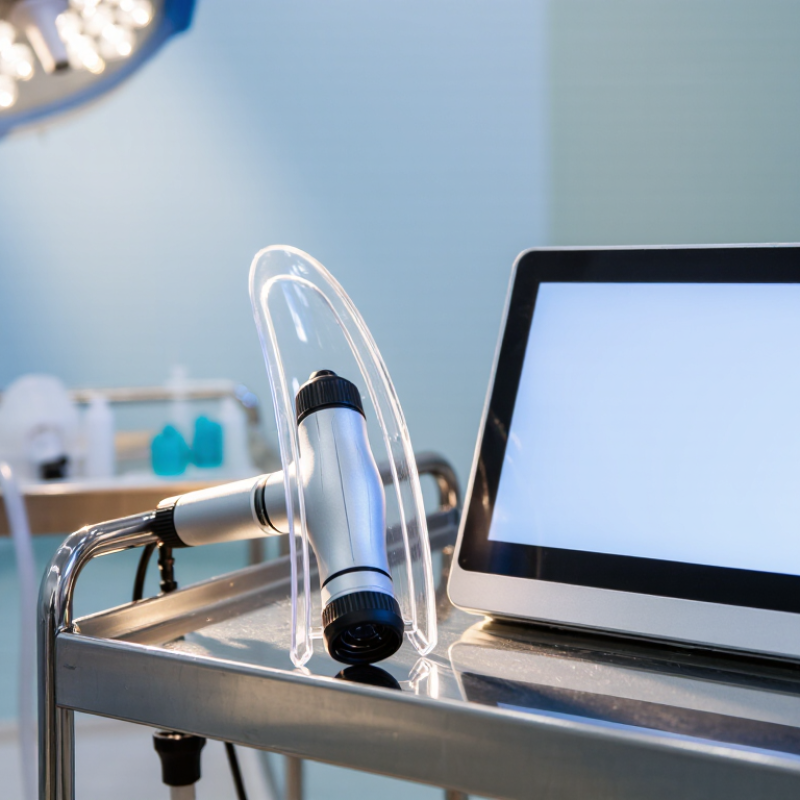
Define Optical Laryngoscopes by Video, Fiber-Optic, and Hybrid Designs
Optical laryngoscopes give clinicians a clearer view of the airway than conventional direct blades. For global buyers, the main choice is not simply price. It is the optical design: video, fiber-optic, or hybrid.
Video laryngoscopes use a small camera near the blade tip. The image appears on an external screen, allowing assistants to observe the procedure. This can support teaching, documentation, and difficult-airway communication. Buyers should check screen brightness, battery life, image delay, and recording controls. These details matter in a dim operating room. Video systems also need careful disinfection and reliable charging routines.
Fiber-optic laryngoscopestransmit the view through bundled Optical Fibers. They are often compact and familiar to experienced users. Their performance depends on clean lenses, intact fibers, and adequate illumination. A damaged bundle may create dark spots or a reduced image.Hybrid laryngoscopes combine fiber-optic viewing with digital display or camera support. They can offer flexibility when staff prefer direct viewing but still need shared visualization.
No design fits every hospital. That is the uncomfortable part. A technically advanced device may fail if training is limited or replacement parts arrive slowly. Buyers should review blade sizes, patient age ranges, cleaning protocols, service access, and local regulatory requirements. A practical trial with clinicians can reveal problems that a product sheet misses. The best choice is often the one staff can use confidently at three in the morning.
Compare First-Pass Success, POGO Scores, and Intubation Times
What Are the Top Optical Laryngoscopes for Global Buyers?
When comparing optical laryngoscopes, first-pass success deserves careful attention. A successful first attempt may reduce trauma, oxygen loss, and repeated airway manipulation. However, reported rates depend on patient selection, operator training, and study design. A high percentage is useful, but it never tells the entire story.
POGO scores offer another practical measure. A clearer view of the glottic opening can help clinicians position the tube with greater confidence. In training sessions, teams should record both the initial view and the final view after repositioning. Small details matter. A screen that remains visible beside the patient’s head may support smoother teamwork. Yet, POGO scores can become subjective when observers use different grading habits.
Intubation time adds essential context. Buyers should compare time from blade insertion to confirmed tube placement, not only the moment of glottic exposure. Some optical systems provide an excellent view but require extra time for tube alignment. Others may shorten the procedure after adequate practice. This is where real-world evaluation becomes important. Test devices with mannequins, difficult-airway scenarios, and varied users. No device wins every airway. That is worth remembering. A procurement team should also examine image latency, cleaning requirements, battery reliability, and local service support. One early trial may look promising, but repeated evaluations often reveal weaknesses.
Top Optical Laryngoscope Categories for Global Buyers
Evidence-informed comparison of representative adult-study medians. Higher first-pass success and POGO scores indicate better initial glottic visualization and tube placement, while lower intubation time indicates faster performance.
Values represent brand-neutral benchmark medians synthesized from adult comparative airway studies; results vary with operator experience, patient anatomy, and clinical setting.
Evaluate Blade Sizes, Cormack–Lehane Grades, and Tube Compatibility
For global buyers, blade size should match patient anatomy, not simply the hospital’s usual inventory. Adult, slim-adult, pediatric, and neonatal options cover different oral spaces and tongue volumes. A longer blade may improve reach, yet it can become awkward in a small mouth. Check blade width, curvature, light or camera position, and handle balance. During evaluation, place the device beside the airway cart and test its grip with gloves. Small details matter.
Cormack–Lehane grading helps compare laryngeal views, but optical images should not be treated as identical to direct laryngoscopy. Grade I usually shows the full glottis, while Grade III may show only the epiglottis. Grade IV shows neither clearly.
Record whether the device improves the view in realistic, trained simulations, not only ideal demonstrations.
Tube compatibility needs equal attention. Confirm the supported tube diameter, cuffed and uncuffed options, stylet clearance, and passage through any blade channel. A tube can fit the specification yet feel restricted during advancement. That difference deserves hands-on testing.
No checklist is perfect. Buyers should also verify cleaning procedures, display visibility, battery performance, training needs, and local regulatory documentation. Availability of replacement blades may influence long-term value more than a low purchase price. Procurement teams sometimes overlook this. Rechecking the complete airway workflow is worthwhile before selecting a model.
Assess 2K/4K Imaging, Battery Runtime, and IPX Protection Ratings
For global buyers, image quality should match the clinical task, not merely the product brochure. A 2K optical laryngoscope can provide clear vocal cord edges and useful color detail on a controlled screen. A 4K model offers finer texture and sharper anatomy, especially on larger displays. However, 4K may require more storage, stronger processing, and higher purchase costs. More pixels are not automatically better.
Battery runtime deserves practical testing. A device advertised for several hours may perform differently when brightness, recording, and wireless transmission operate together. Buyers should request runtime data under realistic conditions. Check charging time, battery replacement options, and low-power warnings. A short pause between procedures can become a serious workflow problem. I have seen specifications look impressive, yet daily charging routines remained inconvenient.
IPX protection ratings also need careful interpretation. An IPX4 device may resist splashes, while higher ratings can support more demanding cleaning environments. Still, water resistance does not always mean full immersion or chemical compatibility. Confirm the approved cleaning method, connector protection, and sealing condition after repeated use. Global facilities should compare local service support and validation documents, not only technical numbers. The better choice may be less advanced, but easier to maintain reliably. That trade-off deserves honest review.