
A Pleated Skirt can look simple on a hanger, yet its performance depends on fabric, heat setting, stitching, and movement. Global buyers need more than attractive photographs. They need reliable measurements, consistent pleat recovery, practical size grading, and clear care instructions. A skirt that opens beautifully on a model may collapse after washing. That detail matters.
Issey Miyake, the influential designer behind Pleats Please, once said, “Clothes are not just for looking at; they are for wearing.” His words remain useful for buyers comparing commercial styles. This guide examines ten Pleated Skirt designs through that practical lens. It considers knife pleats, accordion pleats, box pleats, sunray pleats, micro pleats, tiered shapes, asymmetrical hems, metallic finishes, printed fabrics, and versatile maxi lengths.
Each style serves a different customer and sales environment. Knife pleats may suit schoolwear and office collections. Metallic pleats can attract occasionwear shoppers under strong retail lighting. Recycled polyester offers easy care, while viscose may provide softer movement. However, fabric claims require verification. “Eco-friendly” should never replace testing or documentation.
The ranking is not perfect. Regional taste changes quickly. Buyers should test samples, inspect waist recovery, and check colorfastness before placing large orders. Small flaws can become expensive returns. A thoughtful selection balances visual appeal, production stability, comfort, and repeat demand. That balance defines the strongest global choices.
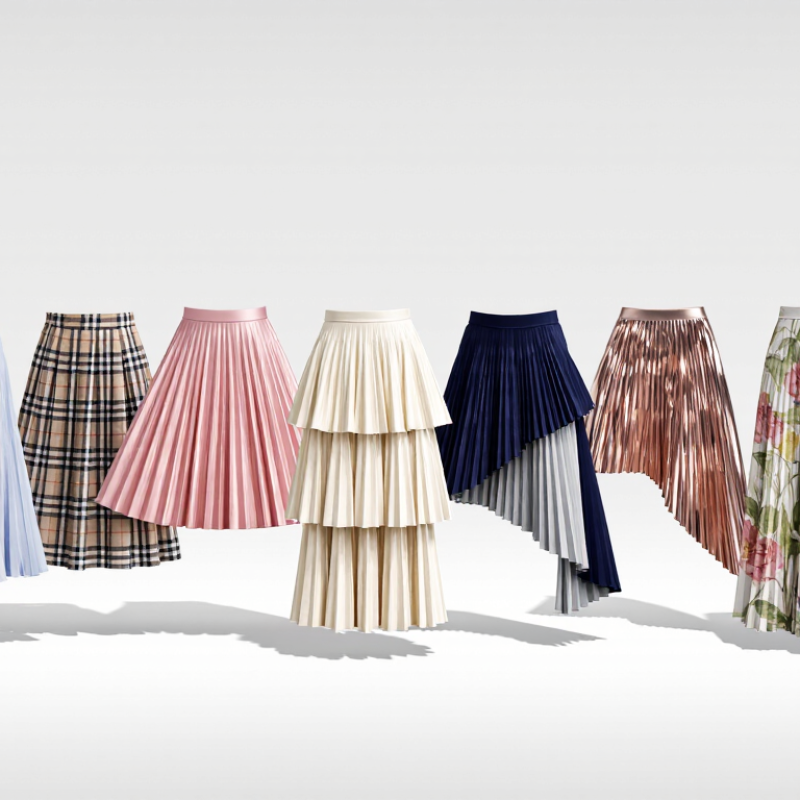
A pleated skirt is a garment shaped by repeated folds running from the waistband toward the hem. These folds create movement, volume, and a recognizable vertical rhythm. For global buyers, the term covers several constructions rather than one fixed design.
The structure usually includes a waistband, folded panels, side seams, and a finished hem. Pleats can be knife, box, accordion, or inverted styles. Knife pleats face one direction, while box pleats open in opposite directions. Each choice changes the skirt’s silhouette and fabric consumption. A wider pleat may provide more movement but require additional material.
Core features include pleat depth, spacing, recovery, fabric weight, and seam stability. Heat-set pleats can hold their shape well, but performance depends on fiber content and finishing quality. In practical inspection, buyers should check whether folds remain even after gentle handling. Small irregularities may become obvious under direct light. Look closely.
A dense woven fabric can create sharper folds and a cleaner outline. Softer fabric often produces fluid movement but weaker definition. The waistband should sit flat without twisting. Hem alignment also deserves attention, especially on longer styles. I would not judge quality from photographs alone. Lighting can hide uneven folds, loose threads, or inconsistent measurements. A useful specification sheet should state garment length, waist tolerance, pleat width, fabric composition, and care requirements. Some suppliers overlook shrinkage testing, which can affect the final shape after washing.
Global buyers are selecting pleated skirts for movement, texture, and adaptable styling. McKinsey’s State of Fashion 2025 describes fashion growth as modest, making versatile designs more commercially important. The ten leading styles show clear visual differences: knife pleats create narrow, sharp lines; box pleats offer structured volume; accordion pleats add flexible movement; sunray pleats widen from the waist; crystal pleats use fine, pressed ridges; inverted pleats create a controlled front opening; kick pleats improve walking comfort; wrap pleats support adjustable fitting; asymmetrical pleats create directional movement; tiered pleats build layered volume.
Details matter. A knife-pleated midi skirt suits office capsules, while an accordion version feels lighter for travel. Box pleats work well with firm woven fabrics and defined waistbands. Sunray designs need careful grading, or the hem may twist. They often do.
The 2025 ThredUp Resale Report projects the global secondhand apparel market to reach 367 billion dollars by 2029. This supports demand for durable, repairable silhouettes, especially among buyers evaluating long-term value. Buyers should check pleat recovery after sitting, seam stability, lining behavior, and wash-test results. Recycled polyester can hold sharp folds, while viscose blends may provide softer drape but weaker recovery. Fabric composition changes the design completely. A wrap style may look attractive online yet shift during movement, so fit trials remain essential. Supplier size charts, production samples, and inspection records create more reliable purchasing decisions than photographs alone.
The chart compares pleated skirt styles by the number of distinctive construction and styling features commonly associated with each design. A higher score indicates greater design complexity and more visual detailing; it does not represent sales volume or brand performance.
For global buyers, skirt style should guide both fabric and construction. A knife-pleat A-line skirt suits polyester, cotton poplin, or lightweight wool blends. Its sharp folds need accurate pressing and secure waistband stitching. An accordion-pleat midi skirt works well in polyester satin or chiffon, especially with a lining. A box-pleat skirt offers controlled volume, while an inverted-box style creates a cleaner front. Both need reinforced fold points. A sunray-pleat skirt uses narrow folds near the waist and wider folds below. Heat-setting is common for synthetic fabrics.
Fabric behavior changes the result. A crushed-pleat skirt uses soft polyester or rayon and accepts an intentionally uneven surface. It may lose texture after rough washing. A kick-pleat skirt depends more on seam construction than permanent pleating. Wool blends and suiting fabrics provide structure. A tuck-pleat skirt uses stitched folds, often in cotton or linen. It feels practical, but excessive stitching can limit movement. An asymmetric pleated skirt may combine satin panels with chiffon inserts. Matching different fabrics is difficult.
The final three styles need careful sampling. A cartridge-pleat skirt creates rounded, cord-like folds and usually requires generous fabric. A godet-pleat skirt inserts triangular panels for movement, often in jersey or crepe. A layered pleated skirt combines two or more lengths, so lining, hem weight, and seam bulk require inspection. In production reviews, buyers should measure pleat spacing after pressing and after washing. Small differences matter. No pleat stays perfect forever. Heat-set polyester is reliable, but natural fibers offer a more irregular, tactile finish. That trade-off deserves testing before bulk orders.
| Rank | Pleated Skirt Style | Typical Length | Recommended Fabrics | Pleat Type | Construction Method | Key Design Features | Common Market Uses | Buyer Considerations |
|---|---|---|---|---|---|---|---|---|
| 1 | Classic Knife-Pleat Skirt | Mini to midi | Polyester twill, polyester crepe, lightweight wool blend | One-directional knife pleats | Heat-setting for synthetic fabrics; stitched waistband; side or back zipper | Clean vertical lines, stable silhouette, easy coordination | Schoolwear, officewear, uniforms, everyday fashion | Check pleat recovery, waistband strength, colorfastness, and shrinkage after care. |
| 2 | Accordion Pleated Midi Skirt | Midi to ankle | Polyester chiffon, satin, georgette, recycled polyester | Narrow, evenly spaced accordion pleats | Permanent heat-set pleats; narrow rolled hem or overlock finish; elastic or fixed waistband | High fluidity, lightweight movement, dense pleat formation | Resortwear, occasionwear, modest fashion, seasonal collections | Request tests for pleat retention, snag resistance, transparency, and seam stretching. |
| 3 | Box-Pleat Skirt | Mini to midi | Cotton twill, polyester-cotton blend, wool blend, denim | Parallel box pleats with inverted folds | Pressed pleats secured at the waist; structured waistband; zipper or button closure | Symmetrical volume, structured appearance, comfortable stride | Preppy fashion, uniforms, casualwear, heritage-inspired apparel | Evaluate bulk at the waist, pleat alignment, fabric weight, and resistance to seam puckering. |
| 4 | Sunray Pleated Skirt | Midi to maxi | Polyester satin, lightweight crepe, silk blend, viscose blend | Pleats radiating from a narrow waist to a wider hem | Bias-cut or panel construction; heat-set pleats; concealed elastic or zipper waistband | Fitted waist with dramatic flare and flowing hem movement | Eveningwear, event dressing, premium contemporary fashion | Confirm hem leveling, shade consistency, bias stretch control, and lining compatibility. |
| 5 | Micro-Pleated Skirt | Mini to midi | Polyester jersey, fine chiffon, lightweight recycled polyester | Very narrow knife or accordion pleats | Precision heat-setting; lightweight overlock seams; elastic waistband or concealed zipper | Fine texture, body-skimming fit, compact visual surface | Contemporary womenswear, travelwear, layering collections | Inspect pleat uniformity, fabric snagging, stretch recovery, and care-label requirements. |
| 6 | Kilt-Inspired Pleated Skirt | Mini to knee | Wool blend, brushed polyester, cotton twill, tartan-style woven fabric | Deep knife pleats, often concentrated at the back or side | Panel construction; reinforced waistband; buckle tabs, buttons, or side zipper | Structured volume, adjustable details, strong heritage character | Casualwear, youth fashion, uniform-inspired collections | Check pleat depth, waistband reinforcement, hardware durability, and pattern matching. |
| 7 | Wrap Pleated Skirt | Midi to maxi | Viscose twill, linen blend, cotton poplin, lightweight polyester | Knife pleats or soft release pleats across a wrap panel | Overlap front panel with waist ties, buttons, snaps, or hidden hook-and-eye closure | Adjustable fit, asymmetric opening, easy on-and-off construction | Resortwear, vacation collections, warm-weather casualwear | Assess overlap security, waist adjustment range, edge finishing, and gaping during movement. |
| 8 | Pleated Tennis Skirt | Mini to above-knee | Polyester-spandex, nylon-spandex, performance knit, stretch woven fabric | Box pleats or knife pleats | Integrated shorts or undershorts; elastic waistband; flatlock or coverstitch seams | Short athletic silhouette, freedom of movement, functional inner layer | Sportswear, athleisure, active lifestyle collections | Test stretch recovery, opacity, moisture management, colorfastness, and seam durability. |
| 9 | Pleated Maxi Skirt | Ankle to floor length | Polyester chiffon, rayon crepe, satin, cotton voile with lining | Accordion, knife, or sunray pleats | Multi-panel construction; lining or slip layer; elastic, drawstring, or zipper waistband | Full-length coverage, elongated appearance, fluid drape | Modest fashion, resortwear, occasionwear, transitional-season dressing | Confirm finished length tolerance, lining attachment, hem weight, and shipping fold recovery. |
| 10 | Pleated Denim Skirt | Mini to midi | Cotton denim, stretch denim, cotton-polyester denim, lightweight twill | Deep box pleats or inverted pleats | Panel sewing with topstitching; belt loops; metal zipper or button closure | Casual durability combined with structured pleat volume | Everyday casualwear, youth fashion, streetwear collections | Review fabric weight, wash appearance, abrasion resistance, pleat pressing, and hardware quality. |
Note: Fabric performance, pleat permanence, and construction results vary according to fiber content, fabric weight, finishing process, garment pattern, and care method. Pre-production samples and wash testing are recommended for international purchasing programs.
Global buyers often compare pleated skirts through three practical questions: How does the fit feel, how well does the fabric recover, and will customers wear it repeatedly? The ten leading options include knife pleats, box pleats, accordion pleats, sunray pleats, crystal pleats, inverted pleats, kick-pleat skirts, wrap pleated skirts, tiered pleated skirts, and asymmetrical pleated skirts. Each creates a different silhouette. Knife pleats suit clean office styling, while accordion pleats move better in lightweight fabric. Sunray pleats can look elegant, but uneven pressing becomes obvious under bright shop lighting.
Fit should be checked on several body shapes, not only a standard mannequin. A waistband that feels comfortable while standing may pinch when sitting. Buyers should measure waist recovery, hip ease, skirt length, and pleat spacing after repeated movement. Quality also depends on fabric weight, thread strength, lining, and heat-setting performance. Polyester blends often hold sharp pleats well, while softer fibers may offer comfort but lose definition sooner. That trade-off matters.
Market appeal changes by region and season. Midi lengths usually offer broader daily wear, while mini and maxi versions serve narrower style preferences. Neutral colors support volume orders, but controlled color variation can refresh seasonal collections. My own first sample review was wrong once: the most attractive skirt had weak pleat recovery after washing. It looked excellent on arrival. That mistake reinforced a useful habit—buyers should test appearance after care, not only before delivery. Small flaws become expensive at scale.
What Are the Top 10 Pleated Skirt Styles for Global Buyers?
International buyers often compare knife pleats, box pleats, accordion pleats, sunray pleats, inverted pleats, crystal pleats, mini skirts, midi skirts, maxi skirts, and tennis-inspired skirts. Each style requires different production controls. Knife pleats need sharp folding and stable pressing. Sunray designs demand accurate grading from the waist to the hem. Accordion pleats usually require flexible fabric with strong recovery.
Sourcing begins with the fabric, not the product photo. Polyester blends can offer consistent pleat retention and simpler care. Recycled fibers may support sustainability goals, but their texture and color performance should be tested. Ask for fabric composition, weight, shrinkage, colorfastness, and wash-test results. Small details matter. A three-centimeter waist error can create costly returns across multiple size ranges.
Buyers should confirm measurement charts, pleat depth, waistband construction, lining, packaging, minimum order quantities, and production lead times. Request a pre-production sample and inspect it after washing. I have seen attractive samples lose their shape during transport or humid storage. That risk is easy to underestimate. Supplier audits, clear inspection standards, and documented approvals improve reliability. Still, no purchasing plan is perfect. Some markets may prefer shorter lengths, while others require modest silhouettes and stronger lining. Seasonal color forecasts also change faster than factory schedules, so flexible quantities can be more practical than chasing the lowest unit price.