
Top 10 Concrete Batching Plants Manufacturers Worldwide

Concrete Batching plants are the quiet engines behind roads, bridges, towers, ports, and industrial foundations. Their performance affects concrete consistency, project speed, material waste, and site safety. A poorly matched plant can create delayed deliveries, uneven moisture control, and expensive repairs. Small details matter.

Professor Adam M. Neville, a respected concrete technologist, once observed, “Concrete is the most widely used construction material in the world.” That scale makes equipment selection a serious engineering decision. It is not merely a comparison of advertised production capacity. Real performance depends on aggregate accuracy, mixer design, control software, dust management, maintenance access, and local service support.

This introduction frames our review of the Top 10 Concrete Batching plants Manufacturers Worldwide. The comparison considers established experience, manufacturing capability, automation, sustainability measures, spare-parts availability, and customer support. It also recognizes regional differences. A compact plant may suit an urban project, while a high-output stationary system may serve a major infrastructure program better. Mobile plants can reduce transport distances, but they may offer different storage and automation limits.

The ranking is useful, not absolute. Market leadership can change. Some manufacturers publish limited field data, making direct comparisons imperfect. That limitation deserves attention. Buyers should verify output under local aggregate conditions, not rely on laboratory claims alone. Site visits, operator feedback, commissioning records, and long-term maintenance costs often reveal more than brochures. This guide provides a practical starting point for contractors, engineers, developers, and procurement teams seeking dependable Concrete Batching plants for demanding projects.
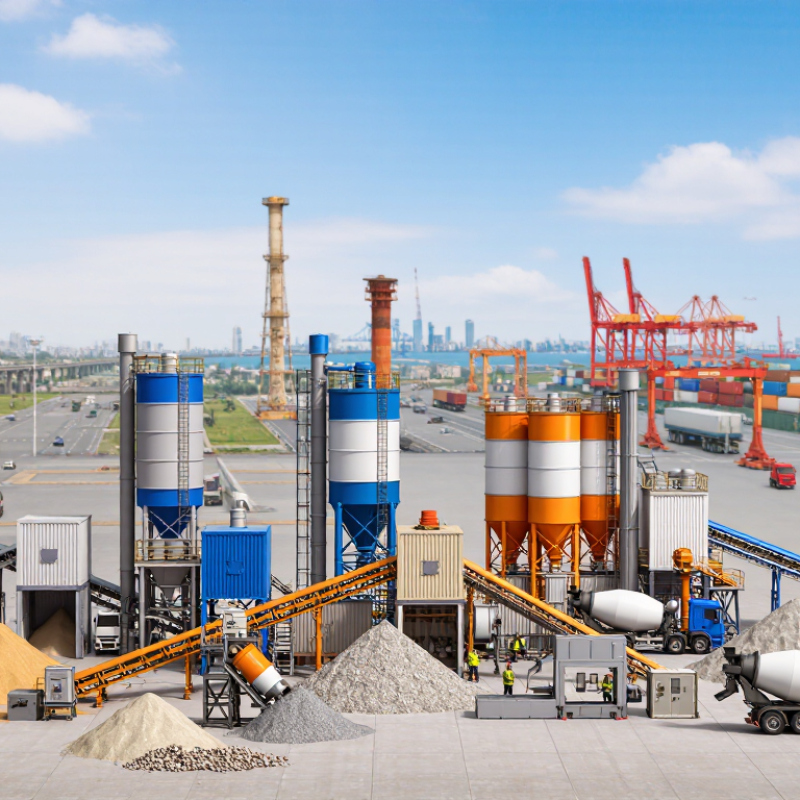
Top 10 Concrete Batching Plants Manufacturers Worldwide

Industry Scope and Criteria for Evaluating Concrete Batching Plant Manufacturers

A worldwide review of concrete batching plant manufacturers needs a defined industry boundary. The Global Cement and Concrete Association estimates annual concrete production at about 14 billion cubic metres. That scale makes plant reliability, material control, and after-sales support commercially significant.

The scope should include stationary, mobile, and compact batching systems. It should also cover automation, aggregate storage, mixing efficiency, dust control, and recycled-water handling. Production capacity alone is a weak ranking method. Buyers should examine weighing accuracy, moisture compensation, calibration records, and batch consistency. EN 206 and ASTM C94 provide useful reference points for concrete quality and delivery requirements. Site experience matters. A plant that performs well in a dry climate may struggle with humidity, freezing conditions, or poor aggregate quality.

Environmental performance deserves equal weight. The International Energy Agency reports that cement production creates roughly 2.4 gigatonnes of direct carbon dioxide emissions annually, or about 7% of global emissions. Manufacturers should disclose energy use per cubic metre, filter performance, noise levels, and maintenance-related downtime. Service coverage, spare-parts availability, software training, and documented case studies also require verification. Evidence matters. However, public data remains uneven, and some manufacturers publish impressive capacity figures without comparable uptime measurements. A fair evaluation should therefore separate tested results from marketing claims, while recording warranty terms, response times, and the operating conditions behind each performance figure.

Global Market Presence and Core Product Categories

Concrete batching plant manufacturers now compete through global market presence, not only production capacity. According to an IMARC Group report published in 2024, the worldwide market was valued at several billion U.S. dollars, with steady growth expected through 2032. Estimates vary by report scope and regional coverage. Data is imperfect. Still, infrastructure investment remains strongest across Asia-Pacific, the Middle East, Africa, and selected Latin American markets. Local transport limits, climate conditions, and public procurement rules strongly influence equipment selection.

Core product categories include stationary, mobile, compact, and containerized batching plants. Stationary plants suit high-volume infrastructure projects and fixed production yards. Mobile systems support road construction, remote sites, and short project cycles.

Wet-mix plants offer more consistent concrete quality, while dry-mix systems can reduce initial equipment costs. The split matters. Buyers should compare output, aggregate storage, weighing accuracy, automation, and maintenance access.

Industry assessments from MarketsandMarkets and Grand View Research consistently identify automation, digital monitoring, and energy efficiency as major development themes. A practical evaluation should examine hourly capacity under real moisture conditions, not brochure figures. Manufacturers with regional service teams usually reduce downtime and spare-parts delays. However, global coverage can appear stronger than it is. Some suppliers rely heavily on distributors, creating uneven technical support. Experienced buyers should verify installation records, calibration procedures, operator training, and after-sales response times before ranking manufacturers worldwide.

Top Concrete Batching Plant Manufacturers and Their Key Strengths

The top concrete batching plant manufacturers worldwide are often distinguished by practical strengths, not attractive brochures. Experienced manufacturers design plants for local aggregates, climate, and project scale. Their engineers check moisture levels, mixer loading, discharge time, and maintenance access before finalizing equipment. This reduces material waste and supports consistent concrete quality. Some manufacturers also offer compact plants for urban sites, while others build high-output systems for highways, bridges, and large foundations.

Automation is another key strength. Reliable control systems record batch weights, water use, and mixing cycles with clear data. Strong manufacturers also provide durable mixers, corrosion-resistant frames, dust-control equipment, and replaceable wear parts. Their service teams matter equally. Fast troubleshooting, operator training, and spare-part availability can prevent costly delays. Still, no manufacturer is perfect. A highly automated plant may become difficult to manage without skilled technicians. That weakness deserves honest attention.

Tips: Compare verified production capacity, not only catalog figures. Ask for maintenance records, installation references, and warranty conditions. Inspect the control interface before purchase. It should be simple under pressure. Check whether the plant suits your aggregate size and local weather. A cheaper system may demand more downtime later. Review the service response plan carefully, because a strong machine is less useful when support arrives too late.

Technology, Capacity, Automation, and Environmental Performance

Top 10 Concrete Batching Plants Manufacturers Worldwide

Technology, Capacity, Automation, and Environmental Performance

Leading batching plant manufacturers now compete beyond output volume. Their strongest systems combine accurate weighing, moisture sensors, remote diagnostics, and recipe control. In practice, stable aggregate moisture can reduce mix variation and costly rework. Capacity must match project rhythm, not just brochure figures. A plant producing 120 cubic metres per hour may still underperform when truck access, material supply, or maintenance planning is weak.

Automation is becoming a measurable advantage. Digital dispatching can shorten waiting times, while automated calibration improves batch consistency. The International Energy Agency reports that cement production creates roughly 7% of global energy-related carbon dioxide emissions. Therefore, environmental performance deserves equal attention. Manufacturers increasingly support recycled aggregates, lower-cement mixes, dust filtration, heat recovery, and energy monitoring. These features matter most when operators actually use the data.

Tips: Compare verified output, not rated capacity. Request noise, dust, water-recycling, and energy figures from comparable sites. Ask for maintenance records and sensor accuracy. A 2023 industry roadmap from the Global Cement and Concrete Association highlights material efficiency and decarbonisation as essential pathways. Still, no scorecard is perfect. Some suppliers report impressive automation but provide limited field evidence. I would inspect a working plant, review rejected-batch rates, and question software downtime before selecting among the top ten.

Top 10 Concrete Batching Plants Manufacturers Worldwide - Technology, Capacity, Automation, and Environmental Performance
Rank Anonymous Manufacturer Profile Representative Plant Configuration Nominal Output Capacity Mixer Technology Automation and Controls Aggregate Storage Range Dust-Control Performance Water and Material Recycling Typical Energy-Saving Features Environmental Performance Rating
1 Manufacturer Profile 01 Compact and stationary commercial plant 60–120 m³/h Twin-shaft compulsory mixer; 2.0–3.0 m³ batch size PLC-based control, recipe management, automatic moisture correction, production reporting 4–8 aggregate bins; approximately 80–240 m³ total Pulse-jet bag filters; enclosed transfer points; typical outlet concentration below 20 mg/Nm³ when correctly maintained Slurry-water recovery and returned-concrete recycling options; approximately 5–15% water reuse potential Variable-frequency drives, optimized mixer motors, automatic idle shutdown High
2 Manufacturer Profile 02 High-capacity stationary plant for ready-mix operations 120–240 m³/h Twin-shaft mixer; 3.0–4.5 m³ batch size Centralized SCADA, multi-user access, automated dispatch integration, real-time diagnostics 6–12 aggregate bins; approximately 180–450 m³ total High-efficiency cartridge or bag filtration; sealed cement conveying; typical outlet concentration below 20 mg/Nm³ Separate wash-water tanks, aggregate reclaiming, and recycled-water dosing control High-efficiency motors, automated batching sequences, reduced compressed-air consumption Very High
3 Manufacturer Profile 03 Mobile or semi-mobile plant for infrastructure projects 45–100 m³/h Planetary or twin-shaft mixer; 1.0–2.5 m³ batch size Touchscreen PLC, electronic weighing, cloud-ready production records 3–6 aggregate bins; approximately 50–160 m³ total Integrated silo filters and covered aggregate charging; typical outlet concentration below 30 mg/Nm³ Optional wash-water collection and controlled recycled-water dosing Shorter setup time, low standby power, compact conveying equipment High
4 Manufacturer Profile 04 Modular plant for urban and regional concrete supply 80–160 m³/h Planetary mixer; 1.5–3.0 m³ batch size Automatic recipe control, moisture probes, remote service access, batch traceability 4–10 aggregate bins; approximately 100–300 m³ total Central dust extraction, silo pressure-relief filters, enclosed weigh hoppers Reclaiming system for returned concrete; recycled aggregate and water dosing available Variable-speed belt drives, optimized batching cycles, heat-loss reduction in control systems High
5 Manufacturer Profile 05 Large ready-mix and precast production plant 100–200 m³/h Twin-shaft mixer; 2.5–4.0 m³ batch size Advanced SCADA, automated load sequencing, ERP/dispatch connectivity, quality-data logging 6–10 aggregate bins; approximately 150–400 m³ total Multi-stage filtration and enclosed cement handling; typical outlet concentration below 20 mg/Nm³ Closed-loop wash-water treatment, returned-concrete separation, adjustable recycled-water percentage High-efficiency motors, load-based control, reduced conveyor operating time Very High
6 Manufacturer Profile 06 Containerized plant for temporary or remote projects 30–75 m³/h Pan or planetary mixer; 0.75–1.5 m³ batch size PLC automation, semi-automatic recipe selection, weighing calibration alerts 3–5 aggregate bins; approximately 35–120 m³ total Silo-top filters and covered charging areas; typical outlet concentration below 30 mg/Nm³ Optional settling tanks and basic wash-water reuse Compact layout, low transport footprint, intermittent-operation energy controls Medium–High
7 Manufacturer Profile 07 High-throughput plant for major civil engineering projects 150–300 m³/h Dual twin-shaft mixer arrangement; 3.0–6.0 m³ combined batch size Redundant PLC architecture, centralized SCADA, automated fault logging, production analytics 8–16 aggregate bins; approximately 250–600 m³ total Centralized baghouse filtration, sealed conveyors, automatic filter-cleaning cycles Dedicated recycling plant, clarified-water reuse, and reclaimed aggregate dosing Regenerative conveyor drives, optimized truck-loading cycles, automatic standby modes Very High
8 Manufacturer Profile 08 Compact plant for precast and block production 25–60 m³/h Planetary or pan mixer; 0.5–1.5 m³ batch size Recipe library, automatic weighing, batch counters, basic quality-control records 3–6 aggregate bins; approximately 30–100 m³ total Local dust collectors and enclosed cement-feed systems; typical outlet concentration below 30 mg/Nm³ Water metering and optional slurry recovery; recycled aggregate use depends on mix design Small-batch dosing, efficient hydraulic systems, reduced idle operation Medium–High
9 Manufacturer Profile 09 Regional stationary plant with flexible configuration 60–180 m³/h Twin-shaft or planetary mixer; 1.5–4.0 m³ batch size PLC control, moisture compensation, automated ticket printing, optional remote monitoring 4–12 aggregate bins; approximately 90–350 m³ total Bag filters on cement silos, dust skirts, and enclosed aggregate transfer routes Returned-concrete recycling equipment and controlled wash-water reuse Variable-frequency drives, short conveyor paths, automated batching optimization High
10 Manufacturer Profile 10 Portable plant for road, mining, and remote construction work 40–120 m³/h Twin-shaft or planetary mixer; 1.0–2.5 m³ batch size Touchscreen control, automatic weighing, recipe storage, GPS-enabled fleet reporting options 3–8 aggregate bins; approximately 60–220 m³ total Portable silo filters and enclosed cement loading; typical outlet concentration below 30 mg/Nm³ Optional water-recovery tank and reclaiming unit for returned concrete Fast mobilization, low standby consumption, compact hydraulic and conveying systems High
Capacity figures are nominal ranges for representative commercial configurations and can vary with mix design, aggregate grading, moisture, batch size, and loading efficiency. Dust values refer to properly designed and maintained filtration systems; actual environmental performance depends on local regulations, operating conditions, and site management.

How to Select a Suitable Manufacturer for Different Project Needs

Top 10 Concrete Batching Plants Manufacturers Worldwide

How to Select a Suitable Manufacturer for Different Project Needs

Choosing among the top 10 concrete batching plant manufacturers requires more than comparing prices. Start with your project conditions. A small urban site may need a compact mobile plant with quick relocation. Large infrastructure work usually demands a stationary plant, higher output, and reliable aggregate storage. Check the required concrete volume, batch cycle, installation space, and local climate. Dust control matters near homes and schools. So does noise.

Ask each manufacturer for verified production data, equipment drawings, and service details. A claimed output of 120 cubic meters per hour may depend on ideal materials and perfect loading. Request references from projects with similar schedules. Inspect mixer design, weighing accuracy, control systems, spare-part availability, and operator training. Field experience shows that poor after-sales support can stop a project faster than mechanical wear. A polished brochure is not proof. My earlier assumption that larger capacity always means better value was incomplete; unused capacity can increase energy and maintenance costs.

Tips: Compare total ownership cost, not only the purchase price. Confirm delivery dates, commissioning support, warranty terms, and emergency response times. Test local aggregates before final selection. Keep a realistic buffer for rain, traffic, and human error. Plans often look cleaner than real sites.

Concrete Batching Plant Selection Guide: Typical Output by Project Need

Selecting a suitable manufacturer starts with matching plant capacity to project scale, site conditions, mobility requirements, and concrete demand. The ranges below represent commonly used industry planning benchmarks rather than company-specific performance data.

Smaller plants are generally suitable for residential and urban projects, while high-capacity stationary systems are more appropriate for highways, bridges, dams, airports, and other continuous-pour applications. Actual output depends on mix design, aggregate loading, transport distance, maintenance, and operating efficiency.

Go to Top
Translate »