
Choosing reliable suppliers is essential when sourcing a Stretch Pique Polo for retail, uniforms, sportswear, or private-label collections. China offers extensive manufacturing capacity, but supplier quality can differ considerably. This guide examines ten established suppliers through practical sourcing criteria, not promotional claims alone.
The evaluation considers fabric composition, GSM options, colorfastness, shrinkage control, stitching quality, and collar recovery. It also reviews sampling procedures, minimum order quantities, production lead times, and packaging standards. Experienced buyers should request fabric swatches and pre-production samples before approving bulk orders. Small details matter. A firm collar, even placket, and clean sleeve hem can strongly influence customer perception.
Factory audits, export experience, and relevant quality certifications provide additional confidence. However, certificates should be verified rather than accepted at face value. Supplier websites may show impressive machinery, yet actual production capacity can change. That uncertainty deserves attention. No supplier is perfect, and the lowest quoted price may hide weaker fabric or inconsistent finishing. We have therefore included practical strengths, possible limitations, and questions buyers should ask during negotiations. Some information may require direct confirmation because prices, staffing, compliance records, and lead times change over time. Buyers should also assess communication speed, technical understanding, and willingness to correct defects. A dependable partner explains tolerances clearly and documents inspection results. This overview is designed to support a careful shortlist, not replace independent due diligence.
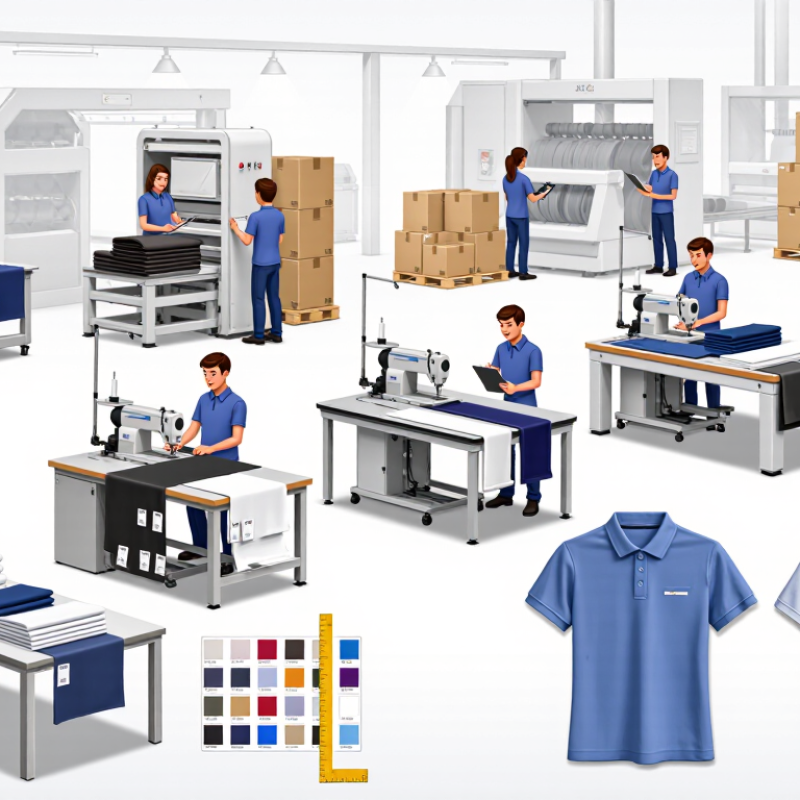
A reliable evaluation starts with fabric performance, not attractive photos. Stretch pique should recover after pulling, resist pilling, and keep its shape after repeated washing.
I usually request fabric swatches, GSM details, fiber percentages, and test reports before discussing large orders. A small wash trial can reveal twisting, color bleeding, or weak collar recovery.
Factory experience matters. Suppliers should explain knitting, dyeing, cutting, and sewing processes clearly.
Their production floor should show consistent stitching, clean workstations, and proper inspection records. I also check whether the factory manages stretch fabrics regularly, because ordinary polo experience may not be enough. Ask for samples made from the same fabric and pattern planned for production.
Evidence builds trust. Useful documents may include material test results, social compliance records, and quality-control procedures.
These documents should match the actual factory, not only a trading office. Communication is another practical test. Can the supplier answer measurement questions accurately? Can it report delays early? A clear size chart and approved sample reduce costly misunderstandings.
No scorecard is perfect. Price can look excellent until packaging, testing, or rework costs appear.
Some suppliers respond quickly but provide weak technical details. Others produce excellent samples yet struggle with deadlines. I would compare at least ten candidates using fabric recovery, sample accuracy, minimum order quantity, lead time, inspection discipline, and after-sales response. Real production evidence matters more than polished promises.
China Top 10 Stretch Pique Polo Suppliers?
China’s stretch pique polo industry combines mature knitting skills with flexible garment production. Many factories use cotton, polyester, or blended yarns with elastane. A typical fabric weighs between 180 and 230 grams per square meter. The pique texture improves airflow and gives the shirt a structured appearance. Elastane supports movement, but excessive stretch can weaken collar recovery.
Production quality depends on more than fabric selection. During factory evaluations, buyers should inspect knitting, dyeing, cutting, sewing, and pressing areas. Useful checks include fabric shrinkage, colorfastness, pilling resistance, and seam strength. Inline inspections can identify uneven stitching before finished garments reach packing. Some suppliers also provide pre-production samples and laboratory reports. These documents make comparisons more reliable.
Small details matter. A stable rib collar should return to shape after repeated washing. Buttons need secure attachment, especially on frequently worn uniforms. Measurements should be checked after washing, not only before shipment. Lower prices may appear attractive, but they can reflect weaker yarns or rushed finishing. No factory is perfect. Even experienced suppliers may struggle with shade matching across different fabric lots. Clear specifications, realistic lead times, and written approval samples reduce these risks. Buyers comparing China’s leading suppliers should also review minimum order quantities, customization capacity, inspection procedures, and communication speed. A polished sample is useful, but consistent bulk production matters more.
The chart presents representative working-day ranges commonly used in China’s export-oriented stretch pique polo production. Actual timing varies according to fabric availability, order quantity, customization, and quality requirements.
Fabric sourcing, knitting, dyeing, cutting, sewing, inspection, and packing are the main operational stages. Stretch pique fabrics typically require additional control of elastane recovery, shrinkage, color consistency, and dimensional stability during production.
China remains a major sourcing base for stretch pique polos. The WTO’s World Trade Statistical Review 2024 confirms China’s leading position in global textile and clothing exports. This advantage comes from integrated knitting, dyeing, cutting, and garment production.
The top ten suppliers should be assessed through factory audits, not catalog images. A reliable supplier should show stable GSM control, fabric recovery tests, colorfastness records, and documented production capacity.
Stretch pique usually combines cotton with elastane or polyester. Textile Exchange’s 2024 Materials Market Report states that polyester represented about 57% of global fiber production in 2023.
That figure explains its common use in quick-drying polo fabrics. However, fiber percentages alone do not prove comfort.
I have found that collar recovery, seam balance, and shrinkage often decide the real result. Small details matter.
China’s leading ten suppliers typically serve private-label, uniform, golfwear, and promotional apparel buyers. Strong candidates offer fabric development, low-to-medium minimum orders, pre-production samples, and third-party inspection support.
Many can produce 180–240 GSM pique with two-way stretch, moisture management, and silicone softening. Yet supplier claims can be optimistic.
Buyers should request wash-test data after three to five cycles and compare measurements against approved samples. A perfect first sample is not enough. Real production can still drift.
China’s stretch pique polo suppliers differ sharply in production capability. A reliable factory should explain its knitting process, fabric composition, and recovery performance clearly. Ask for fabric weight, usually measured in GSM, plus shrinkage and pilling test results. A soft collar means little if it loses shape after washing.
During supplier reviews, I examine sample seams, button alignment, and sleeve symmetry. I also check whether the factory controls fabric inspection before cutting. One useful test is washing a polo several times, then measuring its length and chest width. Small changes can expose weak finishing. A polished sample can mislead.
Customization depends on more than color selection. Capable suppliers can adjust collar height, cuff width, placket construction, and embroidery placement from a detailed tech pack. They should provide lab dips, size-set samples, and pre-production approvals. Confirm minimum order quantities, sampling fees, production lead times, and fabric reservation policies in writing. Some suppliers offer recycled or certified fibers, but documentation must be verified rather than accepted at face value.
Price comparisons also require care. A lower quote may exclude testing, custom labels, or individual packaging. I have seen attractive samples fail because the bulk fabric felt heavier and stretched differently. That weakness matters. Regular communication, traceable quality records, and practical correction procedures reveal more than sales promises. Supplier capability is proven on repeat orders.
Comparative buyer-screening matrix for stretch pique polo production. Supplier identities are intentionally anonymized; figures represent realistic export-market operating ranges and should be verified during quotation and sampling.
| Rank | Supplier Profile | Primary Production Strength | Typical Stretch Pique Fabric | Indicative MOQ | Sample Lead Time | Bulk Lead Time | Fabric Weight | Quality-Control Coverage | Customization Options | Compliance Capability | Overall Score |
|---|---|---|---|---|---|---|---|---|---|---|---|
| 1 | Supplier Profile A | Large-scale OEM Stable repeat production for corporate, golf, and uniform programs. | Polyester/spandex or cotton/polyester/spandex pique; moisture-management finishes available. | 500–1,000 pieces per color | 7–10 working days | 35–50 days | 180–220 GSM | Inline inspection, final AQL inspection, shade-band approval, measurement report, needle control. | Custom labels, heat transfer, embroidery, contrast tipping, plackets, buttons, packaging. | BSCI-readyOEKO-TEX fabric options | 9.2/10 |
| 2 | Supplier Profile B | Performance apparel Strong in lightweight polos for active and outdoor use. | Polyester/spandex pique with quick-dry, anti-pilling, UV-protection, and wicking options. | 300–800 pieces per color | 8–12 working days | 30–45 days | 150–190 GSM | Fabric performance testing, wash testing, colorfastness checks, dimensional stability testing. | Reflective transfers, bonded details, laser-cut ventilation, custom trims, sublimation panels. | GRS optionsISO 9001 systems | 9.0/10 |
| 3 | Supplier Profile C | Premium cotton-blend specialist Focused on soft hand feel and structured retail presentation. | Combed cotton/polyester/spandex pique; mercerized and enzyme-washed options. | 500–1,200 pieces per color | 10–14 working days | 40–55 days | 200–240 GSM | Fiber-content verification, shrinkage testing, pilling assessment, shade and appearance inspection. | Custom rib collars, jacquard trims, garment dyeing, silicone wash, woven labels, retail packing. | OEKO-TEX optionsSocial-audit support | 8.8/10 |
| 4 | Supplier Profile D | Small-batch customization Suitable for emerging brands and detailed tech-pack execution. | Polyester/spandex, cotton/modal/spandex, and recycled-polyester pique selections. | 150–400 pieces per color | 10–15 working days | 35–50 days | 170–210 GSM | Pre-production sample approval, measurement checks, fabric inspection, finished-garment inspection. | Low-MOQ labels, custom artwork, unusual colorways, panel construction, custom buttons and packaging. | GRS documentation supportBSCI audit support | 8.6/10 |
| 5 | Supplier Profile E | Uniform and workwear Experienced with repeat replenishment and size-set control. | Durable polyester/cotton/spandex pique with colorfast and easy-care finishes. | 800–1,500 pieces per color | 8–12 working days | 40–60 days | 190–230 GSM | Needle detection, seam-strength testing, colorfastness checks, carton and assortment inspection. | Chest embroidery, name personalization, department colors, reinforced seams, barcode packing. | ISO 9001 systemsWRAP-ready | 8.5/10 |
| 6 | Supplier Profile F | Fashion private label Strong at seasonal colors, fashion trims, and silhouette development. | Viscose/polyester/spandex, cotton-rich stretch pique, and textured pique options. | 300–700 pieces per color | 12–18 working days | 45–65 days | 180–220 GSM | Fit-session review, color approval, wash testing, seam and trim inspection, final random inspection. | Oversized and slim fits, dropped shoulders, split hems, garment washing, custom trims and artwork. | OEKO-TEX optionsAudit coordination | 8.3/10 |
| 7 | Supplier Profile G | Cost-efficient volume production Competitive for standardized programs with limited design changes. | Polyester/spandex pique and cotton/polyester pique in standard commercial colors. | 1,000–2,000 pieces per color | 7–10 working days | 35–50 days | 170–210 GSM | Incoming fabric checks, inline inspection, finished measurement inspection, packing audit. | Basic embroidery, screen printing, standard labels, color matching, carton customization. | Basic compliance filesThird-party testing | 8.1/10 |
| 8 | Supplier Profile H | Sustainable material sourcing Suitable for recycled-fiber and lower-impact product programs. | Recycled polyester/spandex pique and organic-cotton blend options, subject to certification. | 500–1,000 pieces per color | 12–16 working days | 40–60 days | 160–210 GSM | Transaction-certificate review, fiber-content checks, colorfastness, shrinkage, and pilling tests. | Recycled trims, paper packaging, custom hangtags, embroidery, transfers, and low-impact finishing. | GRS optionsOCS optionsOEKO-TEX options | 8.0/10 |
| 9 | Supplier Profile I | Golf and clubwear Focused on collar recovery, stretch comfort, and presentation quality. | Polyester/spandex micro-pique with moisture management and anti-snag options. | 400–900 pieces per color | 10–14 working days | 35–55 days | 155–195 GSM | Stretch-recovery testing, collar inspection, colorfastness, wash testing, logo-placement verification. | Custom collar stripes, sleeve cuffs, silicone logos, heat transfers, sponsor placement, presentation boxes. | Performance testingSocial-audit support | 7.9/10 |
| 10 | Supplier Profile J | Trading and multi-factory sourcing Useful for mixed product categories and consolidated shipments. | Access to polyester, cotton-blend, recycled, and specialty stretch pique through partner factories. | 300–800 pieces per color | 12–18 working days | 45–70 days | 160–230 GSM | Supplier-managed inspection, third-party final inspection, packing-list and shipment verification. | Multiple factory options, mixed styles, custom labels, embroidery, printing, and consolidated packing. | Document coordinationThird-party testing | 7.7/10 |
Choosing among China’s top 10 stretch pique polo suppliers requires more than comparing prices. A suitable supplier should understand fabric performance, not only garment appearance. Ask for fabric composition, GSM, stretch percentage, and recovery results. A polo may feel soft during fitting but lose shape after repeated washing. Request pre-production samples and wash them at least three times. Check collar stability, sleeve seams, button attachment, pilling, and colorfastness under normal use.
Review the supplier’s production experience with pique knitwear and similar order volumes. Reliable factories should provide clear measurements, inspection procedures, and realistic lead times. Certifications can support material and workplace claims, but verify their scope and validity. A factory visit or independent inspection may reveal storage problems, inconsistent cutting, or weak finishing. Communication also matters. Delayed answers often become delayed approvals. No supplier is perfect. Even a strong sample can hide production variation, so quality controls must continue during bulk manufacturing.
Tips: Compare ten suppliers using the same checklist. Confirm MOQ, sampling fees, size tolerance, packaging, payment terms, and defect handling in writing. Test one smaller production order before scaling. Keep records of every approval. This feels slower, but it can prevent costly corrections. Recheck measurements after washing, because a few millimeters can change the polo’s fit.