
Top 10 Ceramic Insulated Band Heater Suppliers?

Choosing among the Top 10 Ceramic Insulated Band Heater Suppliers requires more than comparing prices or catalogue images. A reliable supplier should demonstrate practical experience with barrel heating, nozzle zones, extrusion lines, and injection molding equipment. Their Ceramic Insulated Band Heater should fit the machine diameter accurately, transfer heat evenly, and survive repeated thermal cycling.

Dr. Michael A. O’Donnell, an industrial heating systems specialist, offers a useful reminder: “A heater is not efficient when it reaches temperature; it is efficient when it controls temperature consistently.” That principle matters during supplier evaluation. Ask about ceramic insulation quality, watt density, maximum operating temperature, clamp design, lead protection, and replacement support. Request technical drawings, test data, and realistic delivery times. Details matter.

Small gaps can become large losses.

This guide examines ten suppliers through an engineering-focused lens. It considers product customization, material quality, temperature stability, manufacturing experience, service responsiveness, and documented quality procedures. It also reviews whether suppliers can support unusual diameters, high-temperature applications, thermocouple openings, and tight installation spaces. Some rankings may remain imperfect because supplier data is not always equally transparent. That limitation deserves attention, not concealment. Buyers should verify certifications, sample performance, and application suitability before placing a large order. A low initial price may look attractive, yet weak insulation or uneven clamping can create hot spots, downtime, and premature replacement. The strongest suppliers provide more than a heater. They provide measurable confidence.
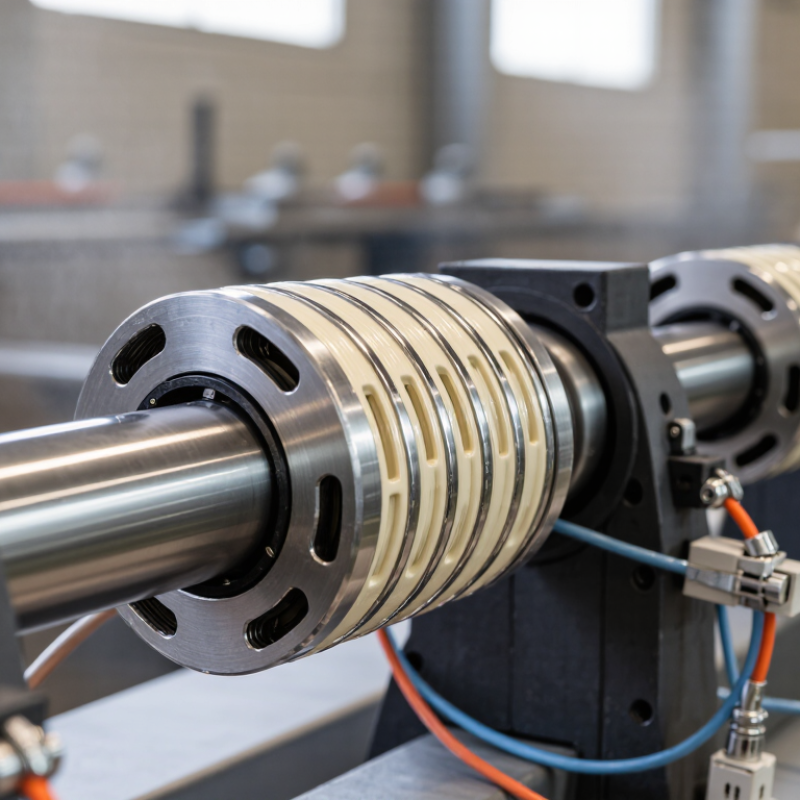
Top 10 Ceramic Insulated Band Heater Suppliers?

What Ceramic Insulated Band Heaters Are and How They Work

Ceramic insulated band heaters are clamping electric heaters for cylindrical surfaces. They commonly warm plastic processing barrels, nozzles, pipes, and laboratory equipment. Inside, resistance wire follows channels formed through a ceramic support. When current passes through the wire, electrical energy becomes heat. The ceramic insulation holds the wire in position and limits heat loss. Heat then moves through the metal sheath and into the barrel wall.

In practical use, installation quality matters as much as wattage. A technician measures the barrel diameter before tightening the band. Even pressure matters. Loose bands create air gaps and uneven heating. Overtightening can distort the heater or damage its insulation. Thermocouple placement also affects control accuracy. It should contact the heated surface, not float beside it. I have seen stable controllers produce poor results because one sensor was installed too far from the process zone.

When comparing suppliers, request drawings, watt density, insulation resistance, temperature ratings, and test records. Reliable manufacturers should explain lead protection and terminal construction clearly. The stated maximum temperature is not always the practical operating temperature. Ceramic insulation can tolerate intense heat, but the wire, sheath, terminals, and process material may limit performance. My first assumption was that higher wattage meant faster production. That was too simple. A modest, well-fitted heater can deliver steadier heat with fewer hot spots. Suppliers that discuss these limitations usually provide more dependable engineering support.

Ceramic Insulated Band Heaters: Typical Rated Power by Band Diameter

Ceramic insulated band heaters use embedded resistance wire to convert electrical energy into controlled heat around cylindrical equipment such as barrels, nozzles, and pipes. The representative ratings below show how heater power commonly increases with band diameter.

Values are representative heater configurations based on common industrial specifications. Actual ratings vary with band width, voltage, operating temperature, insulation, and application requirements.

How the Top Ten Suppliers Are Identified and Compared

Top 10 Ceramic Insulated Band Heater Suppliers?

The top ten suppliers should be identified through evidence, not search ranking. IEA’s Energy Efficiency 2023 report estimates that industry uses about 37% of global final energy. Therefore, heater efficiency deserves serious weight. I compare verified watt density, temperature uniformity, insulation quality, lead protection, and expected service life. The U.S. Department of Energy’s Industrial Decarbonization Roadmap also identifies process heating as a major manufacturing energy load. Each supplier receives a weighted score: thermal performance, 30%; safety documentation, 20%; customization, 20%; delivery reliability, 15%; and lifecycle cost, 15%. Factory testing matters. A clean test chart is more useful than a polished promise.

Tips: Request three recent test records, not one. Check operating temperature, clamping pressure, and voltage stability. Compare energy use after warm-up, not only rated wattage. Ask whether replacement parts remain available for five years. This small detail often exposes weak after-sales planning.

A credible comparison also reviews compliance with relevant electrical and machinery standards, traceable materials, warranty terms, and technical response time. I inspect samples for uneven ceramic packing, loose terminals, and sharp edges. These defects may look minor, but they can create hot spots. Supplier ranking is not permanent; a factory may improve its process or lose consistency. I would publish the scoring method and retain rejected evidence. Some reports simplify the market too much, and my own weighting can be imperfect. That is precisely why independent testing and customer references must remain part of the evaluation.

The Top Ten Ceramic Insulated Band Heater Suppliers

The Top Ten Ceramic Insulated Band Heater Suppliers

Choosing among the top ten ceramic insulated band heater suppliers requires more than comparing catalogue prices. A dependable supplier should show temperature uniformity, watt density, insulation quality, and test traceability. The U.S. Department of Energy’s Process Heating Technology Roadmap reports that process heating consumes about 61% of manufacturing energy in the United States. That figure makes heater efficiency a production issue, not a minor purchasing detail. Ceramic insulation can reduce heat loss around barrels, dies, and pipe sections. However, poor clamping still creates cold spots. This is where many shortlists become too optimistic.

Strong suppliers provide drawings, resistance tolerances, lead protection details, and replacement guidance. They should also support thermocouple placement and controller tuning. IEC 60519-1 provides safety principles for industrial electroheating installations. Buyers should request evidence that designs follow applicable electrical and workplace requirements. Supplier rankings are rarely universal. A top-ten list may reflect delivery coverage rather than measured field life. That limitation deserves attention. A cheaper band can become expensive after repeated shutdowns, damaged wiring, or uneven melt flow.

Tips: Ask for a sample inspection report and a heat-mapping record. Confirm voltage, wattage, inner diameter, band width, and maximum operating temperature. Check lead exits by hand; stiff, exposed wiring is a warning sign. Request a written warranty, spare-part timing, and installation instructions. Do not accept “long life” without test conditions. Real data matters.

Top 10 Ceramic Insulated Band Heater Suppliers? - The Top Ten Ceramic Insulated Band Heater Suppliers

Anonymous supplier comparison based on commonly published ceramic band-heater configurations and standard industry requirements. Temperature, voltage, watt-density, certification, and lead-time figures are typical ranges; final specifications depend on heater diameter, width, machine design, insulation system, and operating conditions.

Rank Supplier Profile Primary Supply Region Common Ceramic Heater Construction Typical Maximum Operating Temperature Common Voltage Options Typical Watt Density Customization Capability Common Compliance Documentation Typical Production Lead Time Typical Applications
1 High-temperature industrial OEM North America and Europe Ceramic fiber or ceramic block insulation with resistance wire or ribbon Up to approximately 650°C / 1,200°F 120 V, 208 V, 240 V, 480 V 20–45 W/in² High
Diameter, width, zones, terminals, holes
Material certificates, electrical test reports, RoHS declarations; certification varies by model 3–8 weeks Plastic processing, extrusion dies, packaging equipment, hot-runner systems
2 Custom process-heating specialist Europe and the United Kingdom Flexible ceramic modules or formed ceramic-fiber assemblies Approximately 540–650°C / 1,000–1,200°F 110–240 V; higher voltage available for engineered assemblies 15–40 W/in² Very high
Multi-zone control and shaped sections
Electrical safety documentation, traceability records, and optional third-party testing 4–10 weeks Industrial vessels, laboratory equipment, semiconductor support tools, thermal processing
3 Large-volume heating-element manufacturer East Asia and global export markets Ceramic-fiber insulated coil heater fitted into a metal band Approximately 450–600°C / 840–1,110°F 110 V, 220 V, 230 V, 240 V 18–40 W/in² Medium to high
Standard and made-to-order sizes
RoHS and REACH statements; CE-related documentation where applicable 2–6 weeks Injection molding machines, blow molding, extrusion, die heating
4 Precision temperature-control supplier North America Segmented ceramic heater with integrated thermocouple provision Approximately 500–650°C / 930–1,200°F 120 V, 208 V, 240 V 15–35 W/in² High
Sensor ports, cutouts, separate zones
Routine dielectric-strength and insulation-resistance test records 4–8 weeks Precision molds, analytical equipment, medical-device processing, laboratory ovens
5 Heavy-duty process-equipment supplier Europe and the Middle East Rigid ceramic insulation with stainless-steel outer band and clamping hardware Approximately 500–600°C / 930–1,110°F 230 V, 400 V, 480 V 20–40 W/in² High
Large diameters, heavy-duty terminals, reinforced bands
CE documentation, RoHS declarations, and factory inspection reports where required 5–10 weeks Chemical processing, industrial piping, large extruders, filtration systems
6 Rapid-prototyping heater supplier Asia-Pacific and online export channels Standard ceramic band with mica or ceramic-fiber thermal insulation Approximately 400–550°C / 750–1,020°F 110 V, 120 V, 220 V, 230 V 15–35 W/in² Medium
Fast adjustments to standard dimensions
Basic electrical test reports and material declarations; verify project requirements 1–4 weeks Prototype tooling, small molding machines, research projects, replacement heaters
7 OEM replacement-heater supplier North America and Latin America Ceramic insulated band designed for direct equipment replacement Approximately 450–600°C / 840–1,110°F 120 V, 240 V, 480 V 18–38 W/in² Medium to high
Terminal orientation and mounting details
Product drawings, electrical test records, and optional traceability documents 2–7 weeks Replacement maintenance, injection molding, extrusion and packaging machinery
8 Energy-efficient heater designer Northern Europe and Asia High-insulation ceramic construction with reduced heat-loss design Approximately 500–650°C / 930–1,200°F 230 V, 240 V, 400 V 12–30 W/in² High
Insulation thickness, split bands, low-loss layouts
Energy-performance data, insulation-resistance results, and RoHS documentation 4–9 weeks Continuous production lines, energy-conscious plastics equipment, thermal forming
9 Small-batch engineering supplier Australia, Southeast Asia and global markets Custom ceramic-fiber band with optional stainless-steel cover Approximately 450–600°C / 840–1,110°F 110–240 V 15–35 W/in² High
Low-volume sizes, lead configuration and cutouts
Batch inspection records and electrical safety test results 3–8 weeks Special-purpose machinery, pilot plants, universities, maintenance projects
10 Cost-focused standard-product supplier Global distribution markets Standard ceramic band heater with conventional clamp and terminal assembly Approximately 400–550°C / 750–1,020°F 120 V, 220 V, 230 V, 240 V 15–32 W/in² Low to medium
Mostly standard diameters and widths
Basic product specifications, RoHS declarations, and standard test records 1–5 weeks General-purpose heating, small plastics machines, replacement and repair work

Key Differences in Products, Quality, and Customization

Top 10 Ceramic Insulated Band Heater Suppliers: Key Differences in Products, Quality, and Customization

The top ten suppliers often look similar online. Their real differences appear during installation and repeated heating cycles. Ceramic insulated band heaters usually offer higher operating temperatures than mica designs. However, watt density, insulation thickness, terminal design, and clamping accuracy strongly affect performance. The U.S. Department of Energy reports that process heating can consume about 51% of manufacturing energy. Small efficiency losses become expensive across continuous production.

Quality evidence matters more than polished catalogs. Ask for resistance-tolerance records, dielectric-strength testing, temperature-mapping results, and traceable material certificates. IEC 60519 provides a useful safety reference for industrial electroheating equipment. In practical audits, uneven contact often causes hot spots before the heater itself fails. That detail is easy to miss. Custom suppliers should provide drawings, lead placement, split-band options, thermocouple openings, and controlled wattage zones. A perfect fit on paper may still need adjustment after the first thermal cycle.

Tips: Compare suppliers using the same duty cycle and barrel dimensions. Request a sample heater before a large order. Check heating time, surface temperature, and power stability.
Also ask how rejected units are handled. A low price can hide weak terminals or inconsistent ceramic support. I would not judge customization by the number of options alone; repeatability matters more. Industry reports from the U.S. DOE and IEA support evaluating lifetime energy use, not only purchase cost.

How to Select the Best Supplier for Your Application

When comparing ten ceramic insulated band heater suppliers, start with your process, not a ranking. Measure barrel diameter, watt density, voltage, target temperature, and installation space. These heaters suit molding, extrusion, and compact cylinders. However, poor contact can shorten service life. The U.S. Department of Energy’s Industrial Decarbonization Roadmap reports that process heating uses about half of manufacturing energy. Heat transfer efficiency deserves close attention. Ask for temperature-uniformity data and test conditions.

Request drawings, terminal details, insulation limits, and control compatibility. A reliable supplier should explain grounding, clearances, and surface-temperature risks. IEC 60519-1 provides useful safety guidance for industrial electroheat installations. The ISO Survey 2023 reports more than one million ISO 9001 certificates worldwide, but certification alone cannot prove heater performance. Request traceable material records, calibration certificates, and documented inspections. Small omissions matter.

Test a sample under your actual load, not an empty bench. Check ramp time, surface temperature, clamp pressure, and replacement access. A capable supplier asks about resin, cycle timing, airflow, and cooling intervals. That question matters. Compare energy use, downtime, and expected service life, not only purchase price. I would still require a pilot run, because catalog ratings can look precise. Uneven clamping may expose the weakness later. Leave room for revision, and define acceptance criteria before ordering.

Go to Top
Translate »