Top Tips for Choosing an Industrial Fabric Printing Machine?
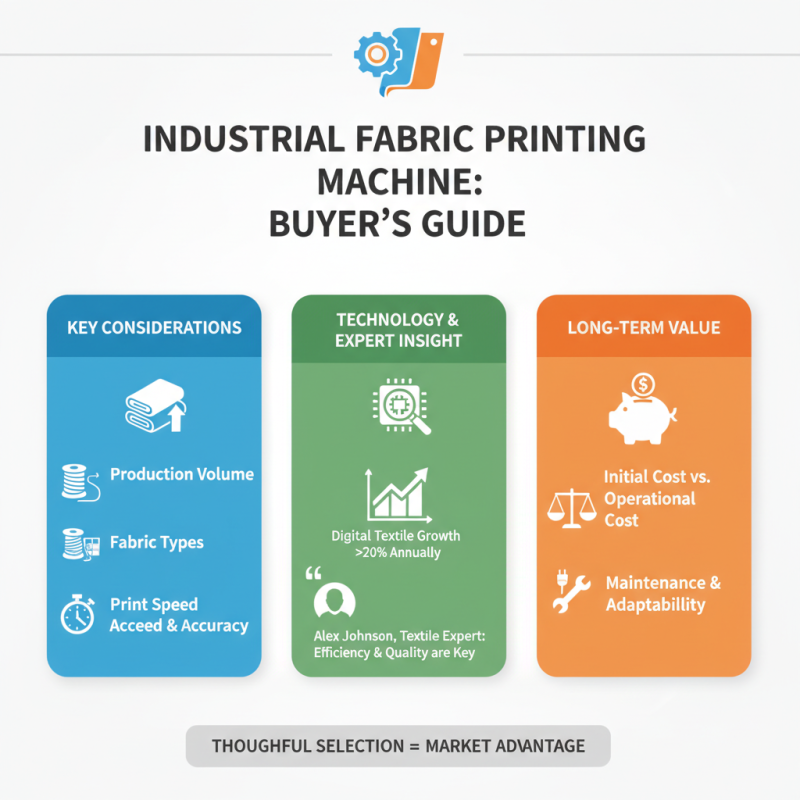
Choosing the right industrial fabric printing machine is essential for any business in the textile industry. With advancements in technology, the selection process can be overwhelming. According to a report by Smithers Pira, the demand for digital textile printing is expected to grow by over 20% annually. This growth indicates that understanding machine capabilities is more crucial than ever.
Expert Alex Johnson, a leading authority in textile technology, emphasizes the importance of careful selection. He states, “Investing in the right industrial fabric printing machine can significantly impact production efficiency and quality.” Businesses may often overlook the long-term implications of their choices. Selecting a machine based solely on initial costs can lead to higher operational costs down the line.
It’s vital to consider the specific needs of your operations. The right machine must align with your production volume and fabric types. Many companies report difficulties in adapting to new technologies. Understanding features like print speed, color accuracy, and maintenance requirements is critical. Ultimately, a thoughtful approach can lead to better decision-making in this competitive market.
Understanding the Different Types of Industrial Fabric Printing Machines
When selecting an industrial fabric printing machine, understanding the types available is crucial. There are mainly three types: digital, screen, and dye-sublimation printing machines.
Digital printers offer flexibility and speed. They excel in creating detailed images, making them suitable for short runs. However, they can sometimes struggle with vibrant colors on certain fabrics, which may require further consideration.
Screen printing machines are known for their efficiency in high-volume production. They produce stunning colors and robust prints. Yet, the setup costs can be high, and they may lack diversity in design for smaller batches.
This approach might not be ideal for businesses that frequently change designs.
Dye-sublimation printing machines provide unique benefits. They infuse ink directly into the fabric, resulting in vivid colors that last longer. However, they are restricted to polyester materials and require careful quality control.
Each machine type has its strengths and limitations. Evaluating specific needs will guide you in making the right choice.
Key Features to Consider When Selecting a Fabric Printing Machine
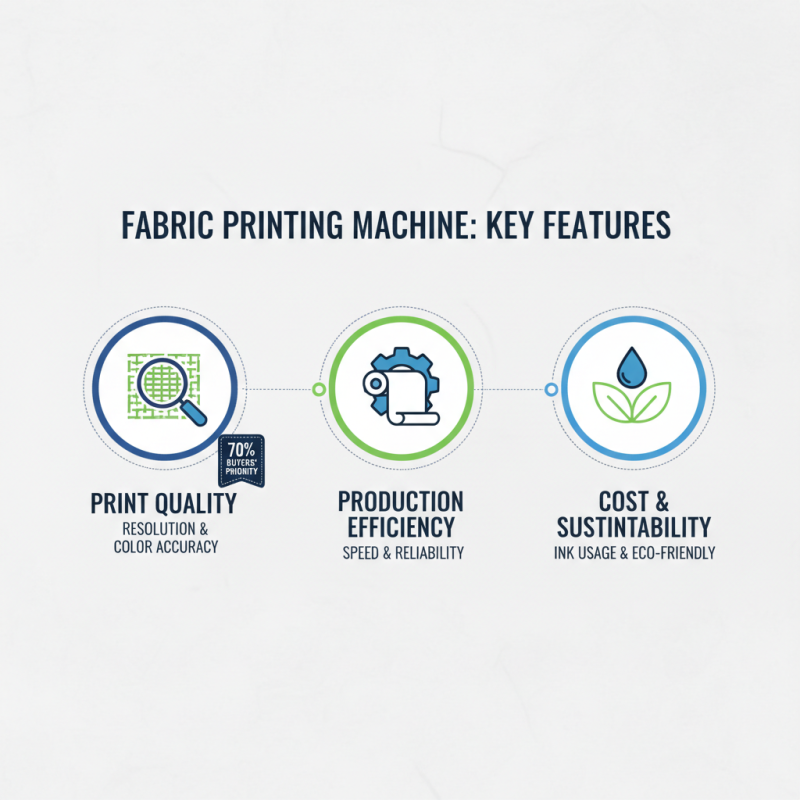
When selecting an industrial fabric printing machine, several key features are crucial for decision-making. One of the most important aspects is print quality. According to a recent report by Smithers Pira, nearly 70% of buyers prioritize resolution and color accuracy. This ensures that the final products meet industry standards and client expectations.
Another factor to consider is the machine's speed. In a fast-paced industry, efficiency can significantly impact productivity. Machines that can produce 1,000 square meters per hour are becoming increasingly popular. This level of output allows businesses to meet tight deadlines and receive a better return on investment. However, it's worth noting that high-speed machines may require more technical know-how and maintenance.
Finally, versatility is essential. A machine that can handle various fabric types expands a company's offerings. Reports indicate that businesses with diverse capabilities see a 30% increase in customer satisfaction. However, not all machines excel in this area. Ensuring that the chosen machine can adapt without compromising quality is vital for long-term success. It's a delicate balance to strike.
Assessing the Production Capacity and Speed Requirements
When selecting an industrial fabric printing machine, understanding production capacity and speed is crucial.
A machine's output can directly impact your business efficiency. According to a survey from Smithers Pira, companies that invest in high-speed printers can increase their output by up to 30%.
This improved efficiency allows businesses to meet customer demands quicker.
Consider the specifics of your operations. A typical machine may offer speeds ranging from 30 to 150 meters per minute.
Businesses should not only focus on maximum speed but also assess how that speed translates to their unique production volumes.
It's important to balance speed with print quality; sometimes, a slower machine produces better detail.
Investing in machines with flexible production capabilities can also help adapt to varying order sizes.
A comprehensive capability report can reveal inconsistencies in performance metrics.
Not all machines perform equally across different fabric types.
Therefore, thorough testing with your specific materials will reveal the real-world speed and quality you can expect.
The right choice requires careful analysis and reflection on your operational needs.
Evaluating Cost-Effectiveness and Return on Investment
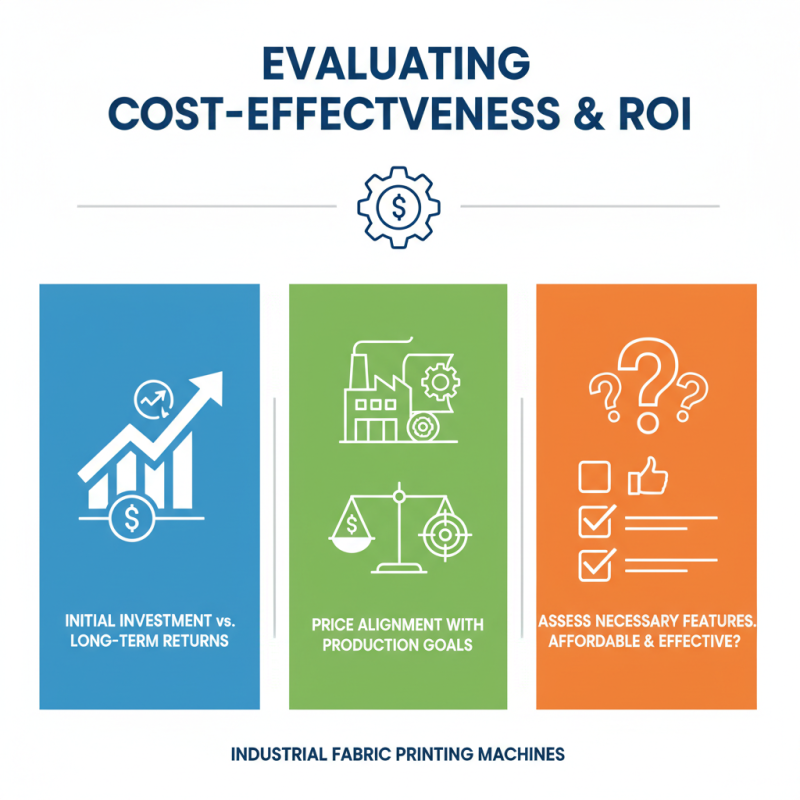
When selecting an industrial fabric printing machine, cost-effectiveness is a crucial factor. Evaluate the initial investment versus long-term returns. A machine's price should align with your production goals. Higher costs may lead to advanced features, but are they necessary? Assess your specific requirements carefully. Sometimes, choosing a more affordable option can be a wise move if it meets your needs effectively.
Return on investment (ROI) is another vital aspect. Calculate how quickly the machine will pay for itself through increased productivity and reduced operating costs. Analyze your production volume. If you print large quantities, a faster machine can save time and money. However, a slower model might suffice for smaller operations. Reflect on your business needs. Sometimes, it’s easy to rush into buying equipment that seems impressive but may not be the best fit.
Consider maintenance and running costs too. Some machines may require expensive inks or regular servicing. These costs can add up quickly. Factor in potential downtime. Machines can break, which disrupts production. A cost-effective choice balances purchase price and future expenses. Lastly, ask for user feedback on various machines. Real-world experiences often reveal insights that brochures cannot provide.
Maintenance and Support Options for Industrial Fabric Printers
When considering maintenance and support options for industrial fabric printers, it's crucial to assess your operational needs. A well-maintained machine ensures quality output and increased productivity. Reports indicate that regular maintenance can extend the lifespan of a printer by up to 30%. Preventative care, such as cleaning and calibrating, plays a significant role.
Support options can vary widely. Some manufacturers offer on-site assistance, while others provide remote troubleshooting. According to industry surveys, 65% of companies prefer real-time support to minimize downtime. Not all service plans are equal. It may be beneficial to invest in comprehensive coverage, especially for complex machines.
User feedback highlights the importance of accessible spare parts. Waiting weeks for components can severely disrupt operations. Organizations must weigh their options carefully. A balance between cost and support effectiveness is essential. Your choice can have lasting impacts on your production efficiency and quality. Engaging with experienced technicians can also offer insights for better performance.
Top Tips for Choosing an Industrial Fabric Printing Machine - Maintenance and Support Options for Industrial Fabric Printers
| Criteria |
Considerations |
Maintenance Options |
Support Features |
| Print Quality |
Resolution, color accuracy, and material compatibility |
Regular cleaning and calibration schedules |
24/7 phone support, online troubleshooting guides |
| Speed |
Production speed vs. print quality trade-offs |
Service agreements for fast repairs |
Response time for emergency support |
| Cost |
Budget constraints and operational costs |
Warranty options and extended service plans |
Availability of training and user support |
| Software Compatibility |
Integration with design software and workflows |
Updates and patches for software |
Dedicated customer service for software issues |
| User-Friendliness |
Ease of operation and training requirements |
User manuals and online training resources |
Community forums and user groups |