Why is the Spinning Frame Machine Essential for Textile Production?
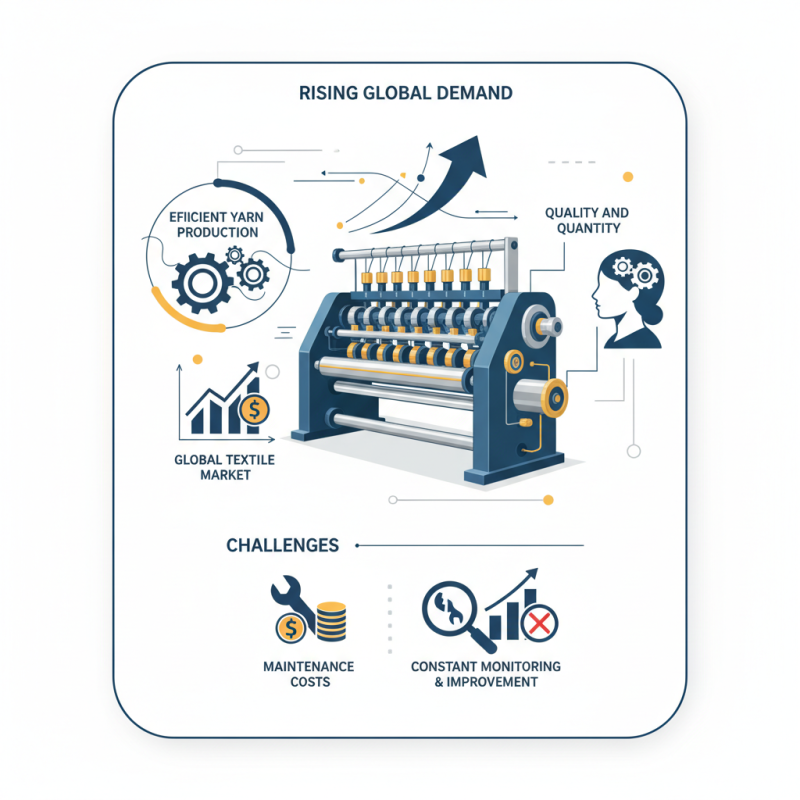
The Spinning Frame Machine plays a crucial role in the textile industry. With rising global demand, it is essential for efficient yarn production. According to the International Textile Manufacturers Federation, the global textile market reached $1.5 trillion in 2022. Spinning frames are at the heart of this production process.
Expert Dr. Emily Carter, a leader in textile engineering, states, “The efficiency of spinning frames directly impacts quality and quantity.” This highlights the machine’s importance in optimizing production while maintaining quality standards.
However, challenges exist. Maintenance costs can be high, and operational downtime poses risks. Efficiency gains require constant monitoring and improvement. In an industry where every detail matters, the Spinning Frame Machine must evolve to meet market needs effectively.
The Historical Development of the Spinning Frame Machine
The spinning frame machine played a pivotal role in the evolution of textile production. Developed in the late 18th century, it revolutionized the fabric industry. This innovation allowed for the mass production of strong yarns. Reports show that textile output in the UK increased by over 200% between 1780 and 1800, largely due to advancements in spinning technologies.
Initial versions of the spinning frame used water power, showcasing an early connection between industry and nature. By the early 19th century, steam power became dominant. This shift enabled larger factories to emerge. However, the transition was not without challenges. Many workers faced job losses as machines took over traditional roles. According to industry research, the integration of machines resulted in a 50% drop in hand-spun yarn production.
As we reflect on the history of spinning frames, their impact remains significant yet complex. The machines increased productivity dramatically, but also raised ethical concerns about labor practices. While they paved the way for modern textile manufacturing, the consequences for workers should not be overlooked. Balancing innovation with social responsibility continues to be a necessity in today’s textile industry.
Understanding the Mechanism of the Spinning Frame Machine
The spinning frame machine revolutionized textile production. Its design enhances yarn quality and increases efficiency. According to recent industry reports, spinning machines have improved productivity by over 30% in the last decade. This equipment uses a system of rollers to draw and twist fibers into yarn, providing uniformity and strength.
The mechanism relies on a simple yet effective principle. Fibers enter the machine through a series of guiding rollers. They are then drawn out and twisted together. This process reduces defects significantly. Furthermore, the spinning frame can produce various yarn types, adapting to diverse textile needs. While effective, there are concerns about energy consumption and maintenance costs, which can hinder some manufacturers.
The reliability of the spinning frame machine is paramount. Regular maintenance is crucial to avoid downtime. However, many factories struggle with this aspect. A report from the Textile Engineering Institute highlighted that approximately 20% of machine failures are due to neglect. Therefore, continuous monitoring and worker training are necessary to maximize the benefits of this technology. Investing in these areas ensures that production remains consistent and efficient.
Why is the Spinning Frame Machine Essential for Textile Production? - Understanding the Mechanism of the Spinning Frame Machine
| Feature | Description | Importance in Textile Production |
| Automation | The spinning frame machine automates the process of spinning fibers into yarn. | Increases efficiency and reduces labor costs. |
| Yarn Quality | Produces high-quality yarn with consistent thickness and strength. | Ensures better end-product quality in textiles. |
| Speed | Allows spinning of large quantities of yarn in a short time frame. | Meets high production demands and market needs. |
| Versatility | Can spin various types of fibers, including cotton, wool, and synthetic materials. | Facilitates production of diverse textile products. |
| Energy Efficiency | Designed to consume less power while operating. | Reduces operational costs and environmental impact. |
Benefits of Using the Spinning Frame in Textile Production
The spinning frame is a pivotal machine in the textile industry. Its capability to produce fine, uniform yarn dramatically enhances fabric quality. According to industry reports, spinning frames can increase productivity by up to 50% compared to manual processes. This efficiency helps meet the growing global demand for textiles.
Using spinning frames also reduces labor costs significantly. Automated processes require fewer operators to manage production lines. This can lead to operational costs decreasing by roughly 30%, which is crucial for manufacturers aiming to remain competitive. However, there is a trade-off; some workers may face job displacement due to automation.
Moreover, while spinning frames boost output, maintaining quality can be a challenge. Inaccurate settings could result in irregular yarn, leading to fabric flaws. As a result, some manufacturers struggle with inconsistencies. It's a reminder to prioritize training and quality control alongside machinery investment, ensuring that technology truly benefits production.
Comparative Analysis of Spinning Techniques in Textile Industry
The textile industry relies heavily on spinning techniques. Traditional methods include ring spinning and open-end spinning, each with unique advantages. Ring spinning offers finer yarns but is time-consuming. Open-end spinning speeds up the process but produces thicker yarns. A 2022 industry report noted that about 65% of global yarn production still uses ring spinning.
In recent years, the spinning frame machine has gained significant attention. It helps bridge the gap between traditional spinning and modern demands. The machine significantly increases efficiency, boasting up to 40% higher production rates compared to manual methods.
The challenges are clear. Transitioning to these machines can be costly and requires worker training. Reports indicate that only 30% of factories have fully embraced this technology.
The comparative analysis of these spinning techniques reveals contrasting benefits. While ring spinning assures quality, the newer machines meet the market's need for speed. Yet, relying too heavily on automation raises concerns. It may reduce skilled labor opportunities in the textile sector. As the industry evolves, balancing innovation and traditional craftsmanship remains a pressing challenge.
Future Innovations and Trends in Spinning Frame Technology
The spinning frame machine plays a vital role in textile production. Future innovations in spinning technology promise exciting transformations. Researchers are focusing on smart technologies. The integration of AI and IoT can enhance the spinning process. This advancement can boost production efficiency by nearly 30%.
Data from industry reports suggest that automation will redefine how spinning frames operate. For instance, leveraging machine learning can predict faults before they occur. A decrease in downtime could lead to significant cost savings. Yet, the transition to these technologies is not without challenges. Workers may need training to adapt to new systems.
Sustainability is another crucial trend. The demand for eco-friendly textiles is rising. Reports indicate that 45% of consumers prioritize sustainable production. Innovations like water-saving spinning techniques are in development. Finding balance within innovation and traditional methods requires careful consideration. It will be interesting to see how these trends shape the textile industry in the coming years.