
Top Wool Carding Machine Manufacturers and Suppliers
Wool remains a specialized natural fibre, and its preparation demands more than impressive machine speed. The International Wool Textile Organisation’s 2024 market information places global wool production at roughly one million tonnes annually, reinforcing the need for dependable processing equipment. Textile Exchange’s Materials Market Report 2024 also shows that wool represents a small share of total global fibre production. That limited volume makes efficient, careful processing especially important for mills serving premium and traceable markets.
A modern wool carding machine opens, blends, and aligns fibres before spinning, felting, or nonwoven production. Its performance depends on cylinder design, feed control, worker settings, fibre length, and moisture conditions. The details matter. A machine that handles fine merino may not suit coarse carpet wool or recycled blends. Buyers should examine production capacity, card clothing quality, cleaning access, energy use, safety systems, and local technical support. These points often reveal more than a catalogue photograph.
This guide reviews leading wool carding machine manufacturers and suppliers through practical purchasing criteria. It considers engineering experience, after-sales service, spare-part availability, installation support, and verified customer applications. Data from the International Textile Machinery Federation and wool-sector publications can provide useful market context, although they rarely offer direct comparisons between individual carding machines. That limitation deserves attention. A neat ranking is tempting, but performance is not universal. Final selection should include fibre trials, sample evaluation, operating-cost estimates, and reference checks with comparable mills. Supplier claims should be tested against measurable results, not accepted automatically. This approach supports more reliable investment decisions.
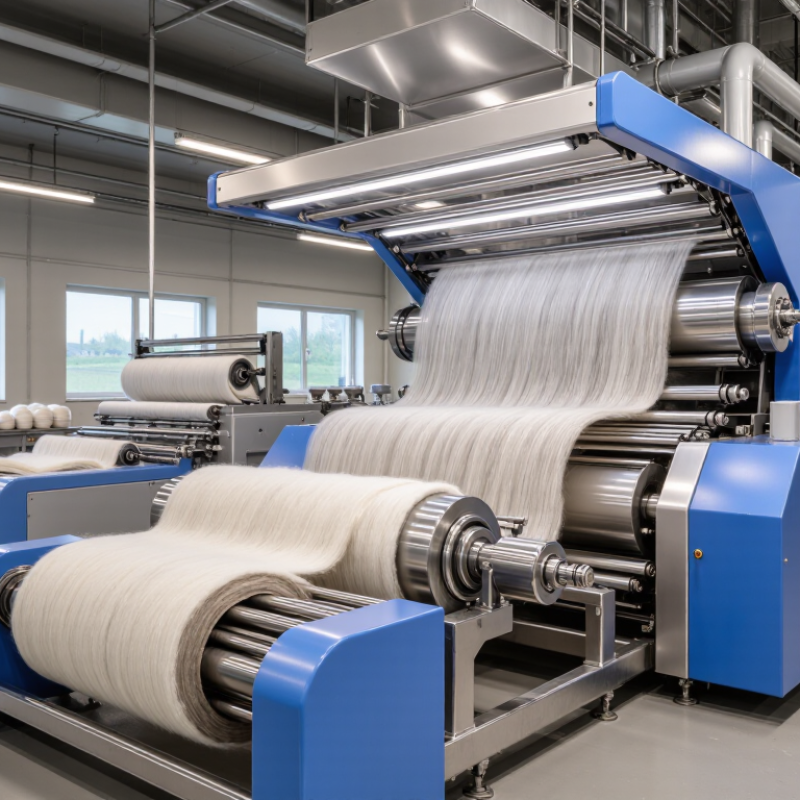
Wool Carding Machines: Purpose, Structure, and Working Principles
Wool carding machines prepare raw fleece for spinning by opening compressed locks, separating fibers, and aligning them into a soft web or sliver. They can also reduce light vegetable matter and short-fiber clumps. The result is more consistent, but not perfectly uniform. That limitation matters when choosing equipment.
A typical machine includes a feed hopper, licker-in, main cylinder, worker and stripper rollers, and a doffer. Fine metallic teeth cover these rotating surfaces. The feed system presents wool gradually, while the licker-in loosens dense tufts. The main cylinder carries fibers across the working zone. Worker rollers lift fibers, and stripper rollers return them for further opening. Finally, the doffer removes the aligned web.
Working quality depends on tooth spacing, roller speed, cylinder settings, and fiber moisture. Too much speed can damage delicate wool. Too little tension may leave neps and uneven patches. Operators should test a small batch before full production. This practical step is often skipped. It should not be.
When comparing manufacturers or suppliers, examine cylinder width, production capacity, cleaning access, safety guards, and adjustment precision. Ask for material specifications, maintenance guidance, and documented performance data. A reliable supplier should explain how the machine handles different wool grades. Real workshop conditions can differ from catalog figures. That difference deserves careful attention.
| Machine Type or Section | Primary Purpose | Main Working Elements | Typical Material Input | Process Output | Important Selection Factors |
|---|---|---|---|---|---|
| Opening Machine | Loosens compressed wool and separates large clumps before carding. | Feed lattice, spiked or pinned opening rollers, stripping elements, and dust extraction points. | Raw or scoured wool in compressed, matted, or compacted form. | More open and evenly distributed fiber tufts. | Fiber length, degree of felting, throughput, dust control, and risk of fiber breakage. |
| Wool Carding Machine | Separates, aligns, and partially disentangles fibers to form a continuous web or sliver. | Feed rollers, taker-in, main cylinder, worker rollers, clearer rollers, flats or stationary bars, and doffer. | Opened wool containing fibers with varied lengths and crimp. | Carded web, batt, or condensed sliver suitable for further processing. | Cylinder width, card clothing specification, production rate, fiber blend, and adjustment range. |
| Taker-In | Receives the fiber feed and transfers it onto the main cylinder while beginning fiber separation. | Fast rotating roller covered with card clothing or metallic wire points. | Loose fiber tufts delivered by the feed rollers. | More individualized fibers carried toward the main carding zone. | Roller speed, tooth geometry, feed density, and gentle handling of delicate fibers. |
| Main Cylinder | Performs the primary carding action through differential movement between opposing wire surfaces. | Large rotating cylinder fitted with card clothing and surrounded by working elements. | Partially opened wool from the taker-in. | Improved fiber separation and greater alignment along the cylinder surface. | Cylinder diameter, surface speed, wire point density, cylinder-to-worker settings, and maintenance access. |
| Worker and Stripper Rollers | Increase repeated fiber transfer and carding action around the main cylinder. | Slow worker rollers paired with faster stripper rollers, normally covered with suitable card clothing. | Fibers carried on the main cylinder. | More uniform fiber distribution and improved removal of small entanglements. | Roller arrangement, speed ratios, wire direction, setting accuracy, and fiber cleanliness. |
| Flat Carding Section | Provides controlled, close-contact carding for improved individualization and alignment. | Flexible or rigid flats positioned above the main cylinder, with adjustable working settings. | Wool requiring additional opening and alignment. | Finer and more even carded material with reduced fiber clumps. | Flat speed, number of flats, setting precision, cleaning frequency, and fiber fineness. |
| Doffer | Removes the carded fiber layer from the main cylinder. | Slower doffer roller, doffer comb, vibrating comb, or stripping mechanism. | Aligned fibers held on the main cylinder. | Continuous web, batt, or fiber layer ready for condensation or collection. | Doffer speed, web weight, stripping method, fiber cohesion, and desired product form. |
| Web Condenser | Compacts and organizes the carded web into a manageable strand or sliver. | Condensing trumpet, calendar rollers, belts, funnels, or delivery rollers. | Loose carded web from the doffer. | Condensed sliver, roving-like strand, or prepared feed for spinning. | Target linear density, delivery stability, web width, and downstream equipment compatibility. |
| Cross-Lapper | Lays the carded web across its travel direction to build a wider and more uniform batt. | Reciprocating or traversing laying carriage, conveyors, and batt take-up system. | Carded web from a wide card or web-forming line. | Layered batt for felting, insulation, padding, or nonwoven applications. | Batt width, basis weight, layering uniformity, production speed, and final-use requirements. |
| Card Clothing | Provides the working points that catch, transfer, separate, and align wool fibers. | Flexible fillet, metallic wire, pinned surface, or specialized clothing mounted on rollers or cylinders. | Selected according to fiber fineness, length, crimp, and processing stage. | Controlled carding intensity and fiber transfer between machine elements. | Point density, tooth angle, point height, wire direction, hardness, and resistance to wear. |
| Drive and Control System | Synchronizes roller speeds and enables adjustment of production and carding intensity. | Electric motors, variable-frequency drives, gearboxes, sensors, interlocks, and operator controls. | Machine settings based on fiber type and product specification. | Stable speed relationships, repeatable processing, and controlled output. | Speed range, overload protection, emergency stops, automation level, and serviceability. |
| Dust and Waste Removal | Removes loose dirt, short fibers, vegetable matter, and airborne lint generated during processing. | Perforated surfaces, suction ducts, filters, waste boxes, and extraction fans. | Dusty or contaminated wool and process waste. | Cleaner working environment and reduced accumulation around carding elements. | Airflow balance, filter capacity, sealing, waste accessibility, and compliance with workplace safety requirements. |
| Small-Scale or Artisan Carder | Processes limited quantities of wool for hand spinning, felting, sampling, or craft production. | Compact cylinder, feed tray or rollers, doffer, manual controls, and interchangeable clothing options. | Small batches of washed, dried, and prepared wool. | Small batts, rolags, or sliver-like fiber preparations. | Footprint, manual effort, cleaning access, power supply, clothing selection, and batch size. |
| Industrial Carding Line | Provides continuous, high-throughput preparation of wool for yarn, felt, insulation, or other textile products. | Integrated opening, blending, carding, web-forming, delivery, monitoring, and extraction modules. | Large and consistent quantities of scoured, blended, or prepared wool. | Continuous sliver, web, batt, or feed for subsequent textile processing. | Required capacity, product consistency, automation, energy use, floor space, maintenance, and safety systems. |
Related Posts
-

Top Fabric Printing Machines for Global Buyers in 2026?
-
2026 Best Fabric Laser Cutting Machine for Global Buyers?
-
Top 5 Benefits of Using Industrial Fabric Laser Cutting Machines for Your Business
-
How to Choose the Best Fabric Laser Cutting Machine for Your Business
-
2026 Best Textile Printing Machine Buying Guide
-
2026 Top Fabric Printing Machine Trends and Innovations?