7 Tips for Choosing Cross Rollers for Global Buyers
Choosing Cross Rollers is a precision decision, not a simple catalog search. Global bearing demand continues to expand. Grand View Research estimates that the worldwide bearings market reached approximately USD 132.8 billion in 2023. Its report also projects strong growth through 2030, driven partly by automation, robotics, and advanced machinery. These sectors demand compact guides, repeatable motion, and stable accuracy.
For global buyers, seven practical checks can reduce costly mistakes. Examine radial and moment loads first. Then compare travel accuracy, preload, stiffness, speed, and expected service life. ISO 281 provides a recognized method for calculating bearing rating life. ISO 76 supports static load evaluation. These standards offer a useful baseline. They do not replace application testing.
Supplier documentation matters. THK and IKO technical catalogs show how rail geometry, preload, lubrication, and mounting conditions influence performance. A small installation error can create uneven contact across the rollers. Imagine a narrow carriage moving under a camera platform. Dust, temperature changes, or insufficient lubrication may gradually increase friction. Seemingly minor details matter.
Global sourcing adds another layer. Buyers should verify material certificates, inspection records, tolerance data, packaging quality, and technical support. SKF’s industrial reporting emphasizes reliability, lifecycle performance, and automation-related demand. That perspective is relevant here. A low purchase price can become expensive after repeated replacements. This is often overlooked.
No selection guide can predict every machine condition. A spreadsheet can still mislead. Prototype testing remains valuable, especially for high-precision axes. The following seven tips connect published standards, supplier evidence, and practical engineering judgment. They help buyers choose Cross Rollers with greater confidence, while leaving room for careful review.
Define Cross Roller Types and Their Motion Requirements
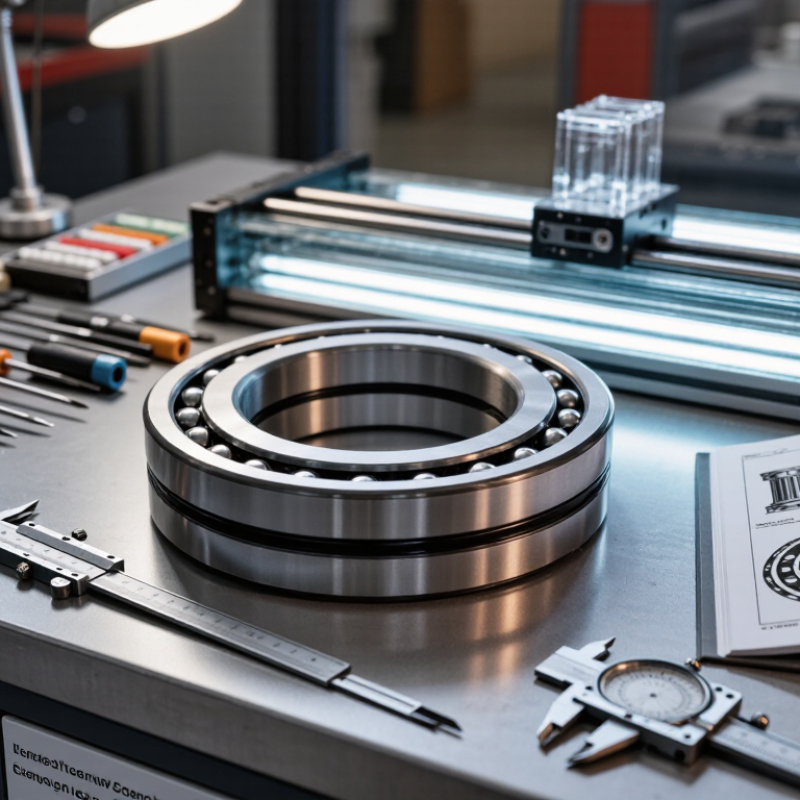
Choosing cross rollers starts with defining the motion, not comparing catalogue dimensions. Crossed-roller guides support linear travel through alternating cylindrical rollers. Crossed-roller tables combine this guidance with a compact platform. Rotary cross-roller bearings handle angular motion around a fixed axis. The distinction matters. A linear stage may need 50 mm travel, while a rotary stage may require continuous rotation or limited oscillation. Mixing these requirements can create costly redesigns.
Motion accuracy depends on more than load capacity. Record stroke, speed, acceleration, moment load, stiffness, preload, and expected life. A 2024 IFR World Robotics report recorded 541,302 industrial robot installations in 2023. That scale reflects rising demand for repeatable, compact motion systems. Semiconductor production adds stricter needs. SEMI’s 2024 forecast placed global semiconductor manufacturing equipment spending above 100 billion US dollars, where vibration and contamination control remain critical. These figures do not select a bearing for you. They show the environment your specification must survive.
For horizontal travel, choose a linear cross-roller guide with suitable preload and mounting flatness. For precision indexing, consider a rotary type with controlled torque and axial stiffness. Check lubrication compatibility, sealing, temperature, and installation tolerance. Ask whether the load is centered. It often is not. A useful mistake is specifying only static load; real systems face acceleration and overturning moments. Some catalog life calculations also assume cleaner conditions than factories provide. Validate them with duty-cycle testing, because the first calculation may be elegantly wrong.
Match Roller Size and Load Capacity to Application Demands
Choosing cross rollers for global applications requires more than matching a catalog dimension. The correct roller size must support the expected load, travel, speed, and mounting conditions.
Start by measuring the available envelope and required stroke. A compact roller may fit neatly, but limited contact length can raise surface pressure. It can still fail early.
Check both loads.
Separate radial, axial, and moment loads before selecting a model. For vertical axes, include the moving mass and acceleration. For horizontal systems, calculate side forces from cutting, vibration, or uneven movement. Add a reasonable safety factor, but do not use an unnecessarily large factor without evidence.
Oversizing can increase friction and reduce responsiveness.
Preload also matters. Excessive preload may create heat, noise, and premature wear.
Global buyers should request load ratings under clearly stated test conditions. Confirm whether figures represent static capacity, dynamic capacity, or calculated service life. Ask about recommended mounting accuracy, lubrication, temperature range, and contamination protection.
A clean laboratory rating may not match a dusty production floor. I have seen selection errors caused by ignoring mounting surfaces, not roller capacity. This is easy to miss.
A spreadsheet cannot capture every shock or installation mistake. Review the real duty cycle, inspect alignment during assembly, and allow practical access for relubrication. If the application includes frequent stops, impacts, or long unattended operation, obtain engineering validation before placing a large order.
Evaluate Accuracy, Rigidity, and Operating Performance
Accuracy, rigidity, and operating performance determine whether cross rollers remain reliable in demanding equipment. Tip 1: Define the required travel accuracy and repeatability before comparing catalogs. ISO 230-2 separates positioning accuracy from repeatability, so these values should not be treated as identical. Tip 2: Check preload carefully. Excessive preload may improve stiffness but increase friction and heat. Tip 3: Request measured data, not only marketing tolerances. Small errors become visible when a stage moves under a microscope.
Tip 4: Evaluate rigidity under the real load direction. A compact guide may appear strong, yet moment loads can cause noticeable deflection. Tip 5: Compare static and dynamic load ratings with your duty cycle. The 2024 World Robotics report recorded 541,302 industrial robot installations in 2023, highlighting the need for stable motion during repeated acceleration and stopping. Tip 6: Inspect operating performance at actual speed, temperature, and lubrication conditions. Laboratory values can change in production. They often do.
Tip 7: Test noise, vibration, and settling time together. A guide that reaches position quickly may still need extra settling before measurement. Industry analysts at Grand View Research estimated the global linear motion market at about USD 10.7 billion in 2023, with continued growth driven by automation and precision equipment. This growth does not remove selection risk. Ask for inspection records, preload limits, and life calculations. Also, leave a safety margin. It is easy to underestimate contamination, mounting error, or uneven bolt tightening during the first design review.
7 Tips for Choosing Cross Rollers for Global Buyers
Evaluate accuracy, rigidity, load capacity, speed, service life, preload, and operating environment.
The chart uses representative 0–100 engineering benchmark scores for three common application profiles. Higher scores indicate stronger suitability for the selected requirement. Actual performance depends on roller size, preload, mounting accuracy, lubrication, stroke, and operating conditions.
Check Materials, Protection, Lubrication, and Service Life
For global buyers, cross roller selection starts with material verification, not catalog size. Hardened bearing steel is common because it balances fatigue strength and dimensional stability. Stainless steel suits humid or corrosive environments, but it may reduce load capacity. Check hardness, heat treatment, and raceway accuracy in the inspection report. ISO 281:2007 defines basic rating life at 90% reliability, so compare calculated life instead of trusting vague “long-life” claims.
Protection needs practical detail. A thin shield may block dust, while a sealed design offers better resistance against coolant and fine particles. However, seals can increase friction and starting torque. ISO 4406:2021 classifies fluid cleanliness by particle counts, reminding buyers that small contamination can damage precision tracks. Ask for sealing tests, allowable temperature ranges, and mounting guidance. Packaging matters too. A scratched raceway is not a minor defect.
Lubrication should match speed, load, temperature, and surrounding materials. Use the supplier’s recommended grease or oil quantity, then verify compatibility before mixing products. Excess grease can create heat; too little causes rapid wear. ISO 281 calculations also depend on actual load conditions, not ideal laboratory figures. Service-life estimates should include vibration, shock, misalignment, and duty cycle. A common purchasing mistake is accepting a high life number without checking application data. Reconsider it. Field performance is often less elegant than the spreadsheet.
Compare Suppliers, Standards, Customization, and Total Cost
Choosing cross rollers for an overseas project requires more than comparing unit prices. In sourcing work, I have seen low-cost offers become expensive after repeated adjustments and delayed shipments. Ask suppliers for load ratings, runout data, material details, and inspection records. Request samples from the same production process as the final order. A polished sample can mislead.
Standards matter when components move between countries and machines. Check dimensional tolerances, corrosion protection, packaging methods, and quality documentation. Confirm how the supplier measures accuracy, not just which standard they mention. Some suppliers provide certificates without explaining test conditions. That deserves a closer look. Compare production capacity, communication speed, and response quality too. A technically strong supplier may still fail when schedules change.
Customization can improve fit, but it often changes lead time and risk. Discuss rail length, preload, mounting holes, lubrication, seals, and special materials before approval. Share drawings with revision numbers. Keep written records. Calculate total cost using tooling, samples, inspection, duties, freight, installation, and future maintenance. A cheaper roller may need tighter installation control. That cost is easy to miss. I would also leave a small budget for redesign, because first specifications are rarely perfect. Reliability comes from documented evidence, practical testing, and a supplier willing to admit limits.