
10 Tips for Choosing TV Surge Protection?

Modern televisions are vulnerable to more than dramatic lightning strikes. Utility switching, faulty wiring, and surges entering through coaxial or Ethernet cables can damage power boards, HDMI ports, and streaming equipment. The National Institute of Standards and Technology explains that transient overvoltages can travel through both power and communication lines. NOAA also reports that lightning causes approximately $1 billion in U.S. property damage each year. The risk is real, but the solution is not simply buying the strip with the largest joule rating.

Lightning researcher Martin A. Uman described lightning as “a giant spark that occurs in the atmosphere.” His observation matters here. A surge moves quickly, invisibly, and sometimes through several connected devices at once. This guide examines 10 practical Tvs Surge Protection tips, including UL 1449 certification, clamping voltage, grounding quality, response ratings, and protection for coaxial connections. It also considers installation experience: a protector may look reassuring beside a television, yet a loose wall outlet or missing ground can undermine its purpose. That part is easy to overlook. We will question common marketing claims, compare realistic protection needs, and identify when replacement is safer than continued use. No device guarantees complete immunity. Careful selection still reduces avoidable damage.
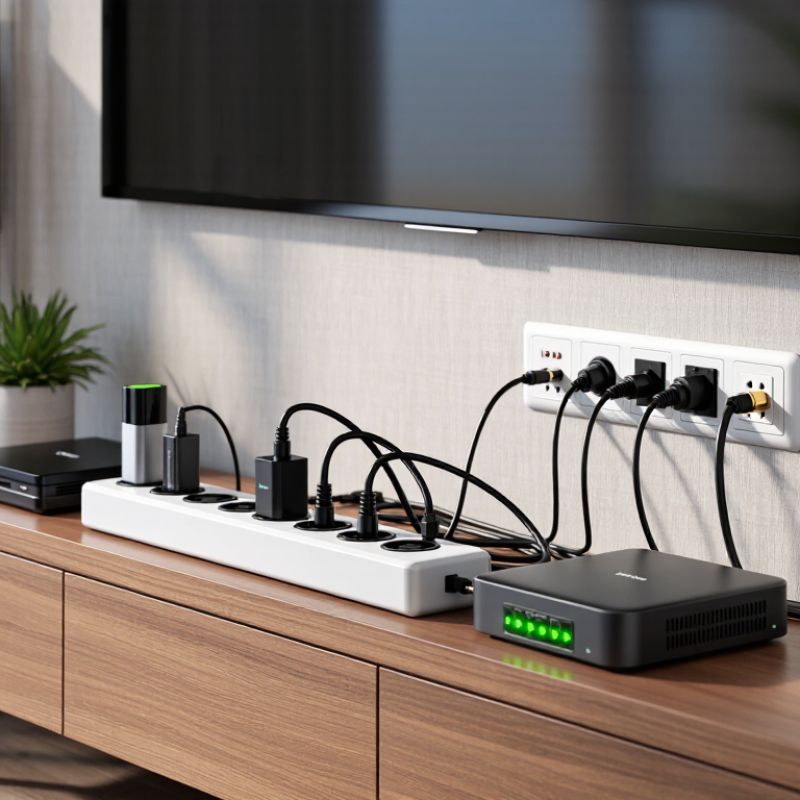
10 Tips for Choosing TV Surge Protection?

Understand How TV Surge Protection Works

Understanding how TV surge protection works is more useful than choosing a device by its price. A surge is a brief rise in voltage caused by lightning, utility switching, or a damaged electrical connection. The protector directs excess energy away from sensitive circuits, usually through metal oxide varistors. These components remain inactive during normal use, then react within a very short time.

Grounding matters. A protector without a properly grounded outlet may offer limited protection. Test the outlet before connecting your television, sound system, streaming equipment, or game console. Check the device’s energy rating, clamping voltage, and response information. Higher joule ratings generally indicate greater energy capacity, but they do not guarantee unlimited protection. That detail is easy to overlook.

Protection should cover every connected path. A surge can travel through power, antenna, cable, or network lines. One unprotected cable may still damage the television. Whole-home protection can reduce larger surges, while a point-of-use protector adds another layer near the screen. Never use a damaged unit, loose plug, or melted socket.

I once assumed a bright indicator meant complete safety. It only showed that one protection circuit remained active. Read the instructions and replace the unit after a serious surge. There is no perfect shield. A qualified electrician should inspect unusual wiring, repeated trips, or missing grounding. Practical caution is still essential.

Identify the Surge Risks in Your Home

Identify the Surge Risks in Your Home

A television can face more than lightning damage. Utility switching, nearby construction, and power restoration can create sudden voltage spikes. Motors inside refrigerators, air conditioners, and washing machines may also send disturbances through household wiring. In my experience, the television is often blamed first, although the real problem may begin elsewhere. Check the outlet, coaxial cable, streaming equipment, and game console connected to it. An unused cable connection can still provide another path for a surge.

Tip: Inspect the outlet for looseness, scorch marks, or buzzing sounds. Stop using damaged sockets and ask a qualified electrician to examine them. Tip: Note when problems happen. A blank screen after a storm suggests a different risk than repeated shutdowns during appliance use. Tip: Review the home’s wiring age and grounding condition. Older systems may need professional testing, not guesswork.

Do not ignore outdoor connections. A television connected to an antenna, satellite cable, or network cable may receive a surge through those lines. Protection on only one power cord may leave other entry points exposed. Tip: Trace every cable before choosing protection, and select equipment rated for all connected pathways. A surge device is not a substitute for proper grounding. I once assumed a power strip solved everything; it did not address the coaxial route. That mistake is easy to repeat. A licensed professional can verify grounding, bonding, and the correct protection level for your home.

10 Tips for Choosing TV Surge Protection: Identify the Surge Risks in Your Home

Typical peak transient-voltage levels associated with common household surge sources.

Lightning-related surges can be far more severe than everyday switching events. Motors, compressors, HVAC systems, refrigerators, and power tools can also create repeated smaller surges that may stress a television over time. Actual levels vary with wiring, distance, grounding, and the type of event, so choose protection with adequate joule capacity, a low clamping voltage, and a properly grounded outlet.

Compare Surge Protector Types and Protection Ratings

10 Tips for Choosing TV Surge Protection?

Choosing TV surge protection starts with the protection type, not the advertised joule number. A plug-in device sits beside the television and helps reduce voltage transients on that branch circuit. It cannot protect coaxial, Ethernet, or antenna cables unless those paths have suitable coordinated protection. A whole-home surge protective device installs at the service panel and addresses surges entering through utility conductors. NEMA guidance reports that many residential surges originate inside the home, often when motors switch on or off. That detail matters: a refrigerator compressor can disturb sensitive electronics even on a quiet evening.

Compare ratings using recognized standards. UL 1449 evaluates surge protective devices, while IEEE C62.41.1 describes surge conditions on low-voltage AC circuits. Look for a listed product, a voltage protection rating (VPR), and a nominal discharge current (In). A lower VPR generally means less let-through voltage during testing. An In value of 3 kA or 10 kA indicates test discharge capability, not guaranteed lifetime. Joule ratings help compare similar plug-in units, but they are not complete safety measures. Check the clamping path.

In field inspections, I would match the device to the panel, wiring system, and cable routes before buying. A cheap strip behind a wall-mounted television is not equivalent to panel protection. I have seen impressive numbers distract from missing certification marks or unclear replacement indicators. That is an easy mistake. NFPA 780 emphasizes bonding and grounding, not merely installing an accessory. No device guarantees survival after every surge. Selection should reflect the whole electrical path, not one dramatic number on a package.

10 Tips for Choosing TV Surge Protection? - Compare Surge Protector Types and Protection Ratings
Tip Selection Dimension Protection Type or Rating What the Specification Means Recommended Choice for a TV Setup Important Limitation or Check
1 Identify every connected path AC power, coaxial cable, Ethernet, HDMI-connected devices A surge can enter through the power line or through a connected antenna, cable, satellite, or network line. Protect the TV power connection and review protection for any outdoor or incoming signal cable. Protecting only the wall-power plug may not protect equipment connected to an external coaxial or data line.
2 Choose the correct device type Power strip, surge-protective power strip, UPS, or whole-home SPD A standard power strip provides additional outlets but does not necessarily provide surge suppression. A UPS also supplies battery backup. Use a listed surge-protective power strip for basic TV protection; consider a UPS when short power interruptions are a concern. A UPS is not automatically a substitute for whole-home surge protection or signal-line protection.
3 Check the safety certification UL 1449 or an applicable national safety standard UL 1449 is the relevant U.S. standard for surge protective devices. Certification indicates that the product has been evaluated against defined safety and performance requirements. Select a product with a verifiable certification mark appropriate for the country of use. A marketing statement such as “surge protected” without a recognizable safety listing is not enough to compare product safety.
4 Compare the voltage protection rating VPR: 330 V to 1,500 V commonly shown on U.S. listings The Voltage Protection Rating indicates the let-through voltage measured under specified test conditions. Lower VPR generally means less transient voltage reaches the connected equipment. Prefer a lower listed VPR when other safety, current, outlet, and certification requirements are equivalent. VPR values are test results, not a guarantee that a TV will survive every real-world event.
5 Use joule ratings carefully Approximately 500–2,000+ joules for many consumer models The joule figure describes the energy absorption capacity claimed under the manufacturer’s test method. It is useful for comparison within a product category. Choose a clearly documented rating suitable for the value and number of connected devices. Joule ratings are not directly interchangeable across all manufacturers and do not replace checking VPR or certification.
6 Look for a disconnect or status indicator Thermal protection, internal fuse, or protection-status light Surge components can degrade after repeated events. A status indicator can show whether the protective circuit is still active; thermal protection helps limit overheating risk. Choose a model with a clear protection-status indicator and documented fail-safe design. A light that indicates power is present may not indicate that surge protection is still functioning.
7 Match the electrical load Voltage, frequency, amperage, and maximum load The protector must be compatible with the local mains supply and must not be loaded beyond its rated current. For a typical TV, streaming device, soundbar, and game console, select a unit rated for the local supply and the combined equipment load. Do not connect one surge strip to another, and do not exceed the listed current or wattage limit.
8 Consider outlet spacing and layout Number of outlets, spaced outlets, right-angle plug, cord length Large TV adapters and power bricks can block adjacent sockets on compact strips. Choose enough outlets with at least one or two widely spaced sockets for bulky adapters. More outlets do not mean more surge capacity; the electrical rating remains the limiting factor.
9 Assess coaxial and data-line protection Coaxial, telephone, or Ethernet protection modules Signal-line protection can reduce the risk of a surge traveling through connected low-voltage cables, but it must match the cable type and system requirements. Consider a compatible coaxial protector for an outdoor antenna, cable, or satellite connection, especially where the cable enters the building. Some inline protectors can affect high-speed data or signal performance; verify compatibility before installation.
10 Plan for installation and replacement Point-of-use SPD, service-panel SPD, grounding, and replacement interval Whole-home protection is installed at the electrical panel by a qualified professional, while a point-of-use protector is installed near the TV. Use layered protection where appropriate and replace a protector after a major surge, visible damage, overheating, or a failed status indicator. Surge protection cannot replace correct grounding, code-compliant wiring, or professional electrical work.
Quick comparison: For most home TV systems, prioritize a verifiable safety certification, a lower VPR when comparable, a clearly documented joule rating, thermal or disconnect protection, adequate load capacity, and coverage for connected coaxial or data lines when applicable.

Check Compatibility, Safety Features, and Installation Needs

10 Tips for Choosing TV Surge Protection

Check compatibility before buying. Match the protector with your outlet voltage, plug type, and television power rating. A three-prong plug needs a properly grounded outlet. Otherwise, protection may be limited.

Tip 1: Check voltage.
Tip 2: Confirm grounding.
Tip 3: Include coaxial, Ethernet, or antenna connections.

A surge can travel through connected cables, not only the wall socket. IEEE Standard C62.41.1 provides guidance on surge environments in low-voltage systems.

Safety features matter more than a large joule number. Look for thermal protection, overload protection, grounded and protected indicators, and a clear replacement signal.

Tip 4: Check the clamping voltage.
Tip 5: Prefer recognized safety certification.
Tip 6: Avoid damaged casings or loose sockets.

NFPA’s Home Structure Fires report estimated 32,000 U.S. home fires involving electrical distribution equipment each year from 2016 to 2020. Those fires caused about 470 deaths and 1,100 injuries. Surge protection cannot fix unsafe wiring.

Installation needs deserve equal attention. Keep the device accessible behind the television, but do not bury it under rugs or furniture.

Tip 7: Never daisy-chain protectors.
Tip 8: Leave ventilation space.
Tip 9: Use a panel-mounted protector for whole-home coverage, installed by a qualified electrician.
Tip 10: Replace the unit after a major surge or warning light.

Small details matter. I have seen people trust an old protector for years; that assumption needs reconsidering. A short cable path, firm connections, and regular inspection reduce avoidable weaknesses.

Evaluate Durability, Warranty, and Long-Term Value

Choosing TV surge protection requires more than comparing joule ratings. Check the enclosure, cable strain relief, and spacing around each outlet. A durable protector should resist heat, repeated switching, and accidental impacts behind a crowded cabinet. Look for testing to UL 1449 and performance guidance from IEEE C62.41.1 and C62.41.2. These standards help evaluate surge environments and protective-device behavior.

Warranty language matters. Read the replacement period, proof-of-purchase rules, and exclusions before buying. Some warranties exclude damage caused by poor grounding, lightning, installation errors, or unauthorized repairs. That fine print can change the product’s real value. A long warranty is useful, but it is not proof of superior construction. Check whether the protection indicator remains visible after the unit fails. That small light matters.

Long-term value depends on replacement cost and protection continuity. A Berkeley Lab report estimated that power disturbances cost the U.S. economy between 119 and 188 billion dollars annually. The estimate is old, so I would not use it as today’s exact figure. Still, it shows why repeated electrical disturbances deserve attention. Choose a unit with thermal safety, reliable clamping performance, and enough outlets for the entire TV setup. Avoid stacking adapters. Keep ventilation clear. Replace the protector after a serious surge, even if the television still works. That feels wasteful, but invisible damage is difficult to measure.

Go to Top
Translate »